Leawood KS Basement Waterproofing for Luxury Home Foundations
Serving Leawood and Johnson County with 6 specialized foundation and waterproofing services. Local expertise. Permanent solutions. Free estimates.
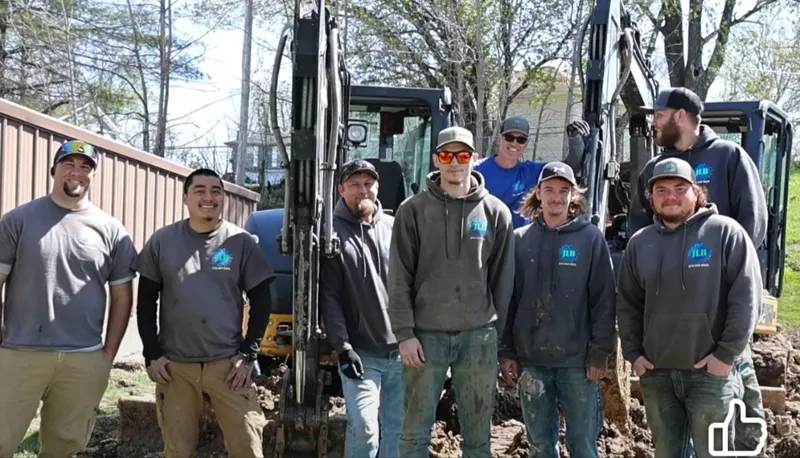
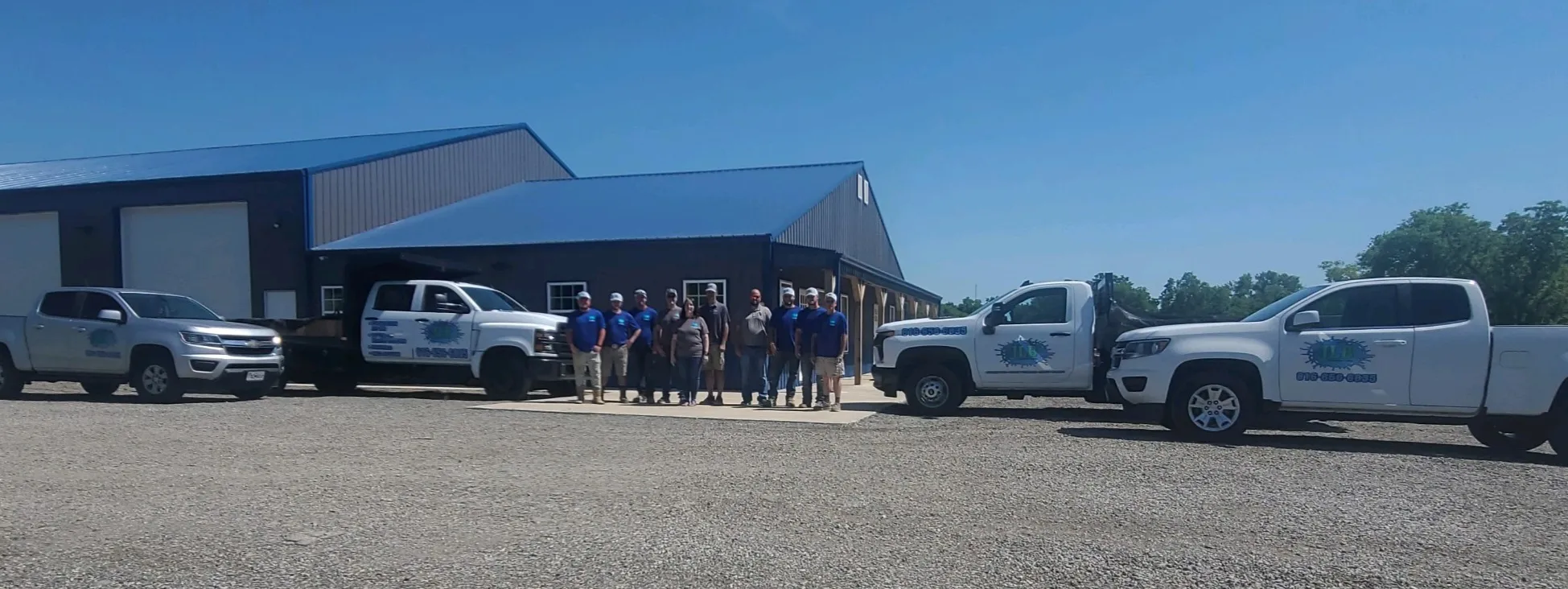
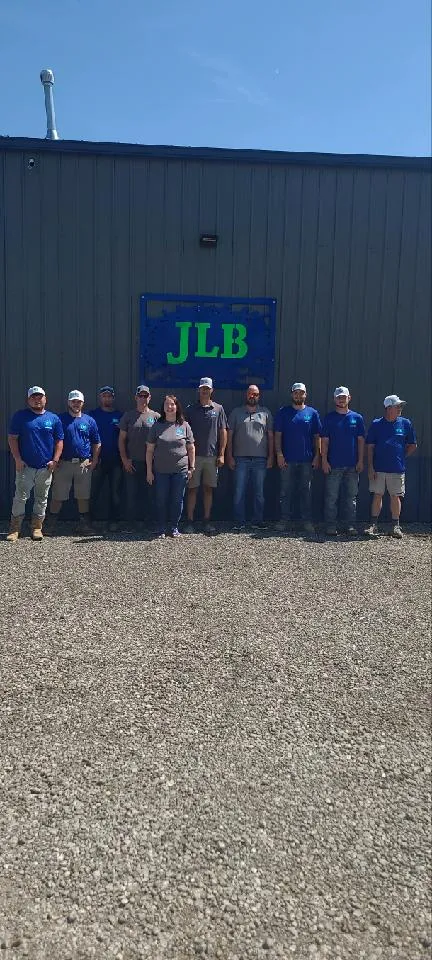
Meet the Team Serving Leawood
JLB Foundation Repair is a local company — not a franchise. We serve Leawood and the surrounding Kansas City metro with foundation repair, waterproofing, crawlspace encapsulation, and drainage solutions. Watch to learn who we are and how we work.
Watch Our Work in Leawood
Foundation Repair and Waterproofing Services in Leawood
Every foundation problem has a permanent fix. We use engineered systems — not quick patches — backed by transferable warranties and decades of field experience.
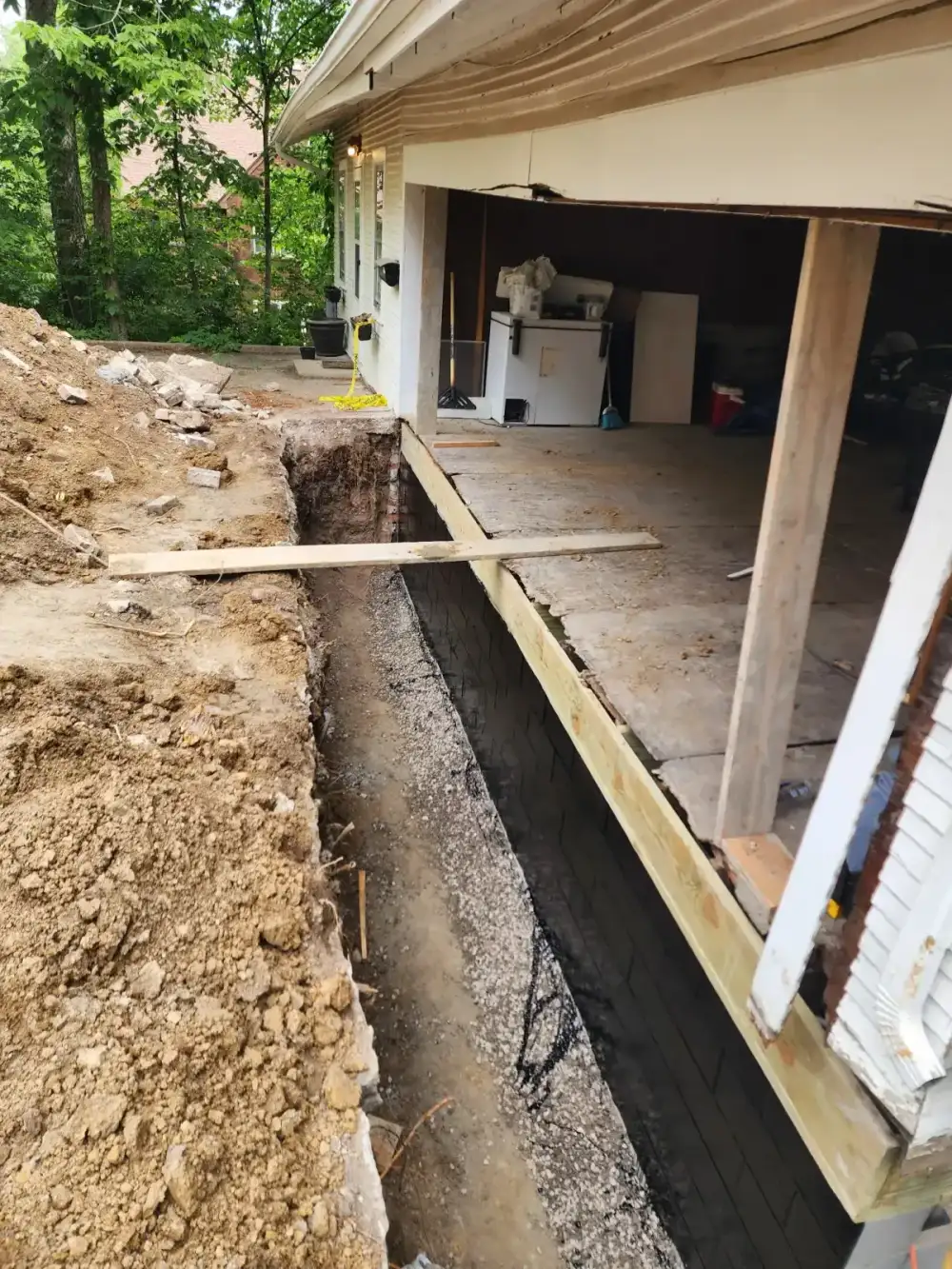
Foundation Repair
Steel push piers and wall anchors to stabilize and lift settling foundations. Stop the cracks, level the floors, save the home.
Learn More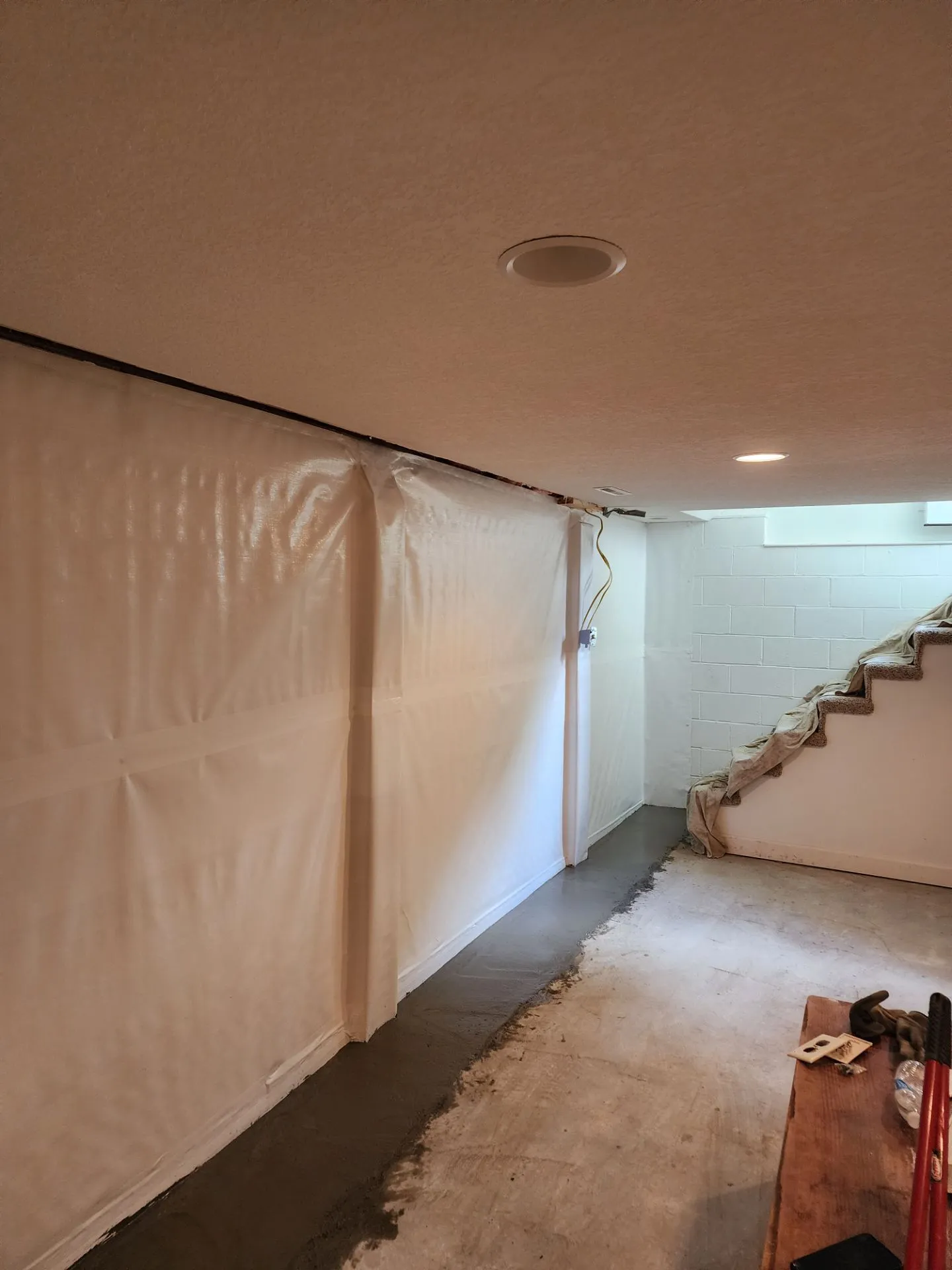
Basement Waterproofing
Interior drainage systems, sump pumps, and vapor barriers to keep your basement permanently dry. No more water. No more worry.
Learn More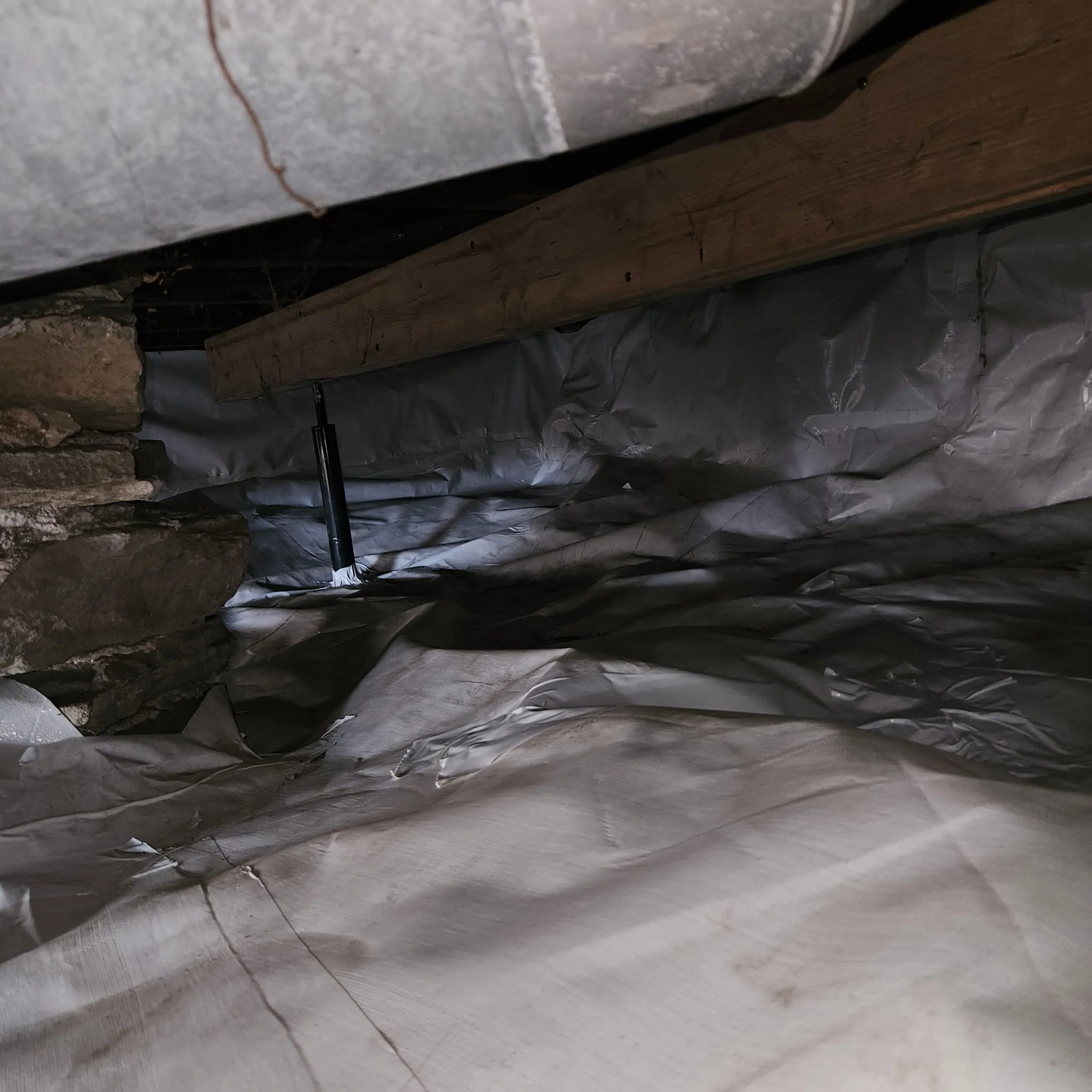
Crawlspace Encapsulation
Full encapsulation with spray foam for BOTH crawlspace and basement — twice the protection competitors offer, at a lower cost.
Learn More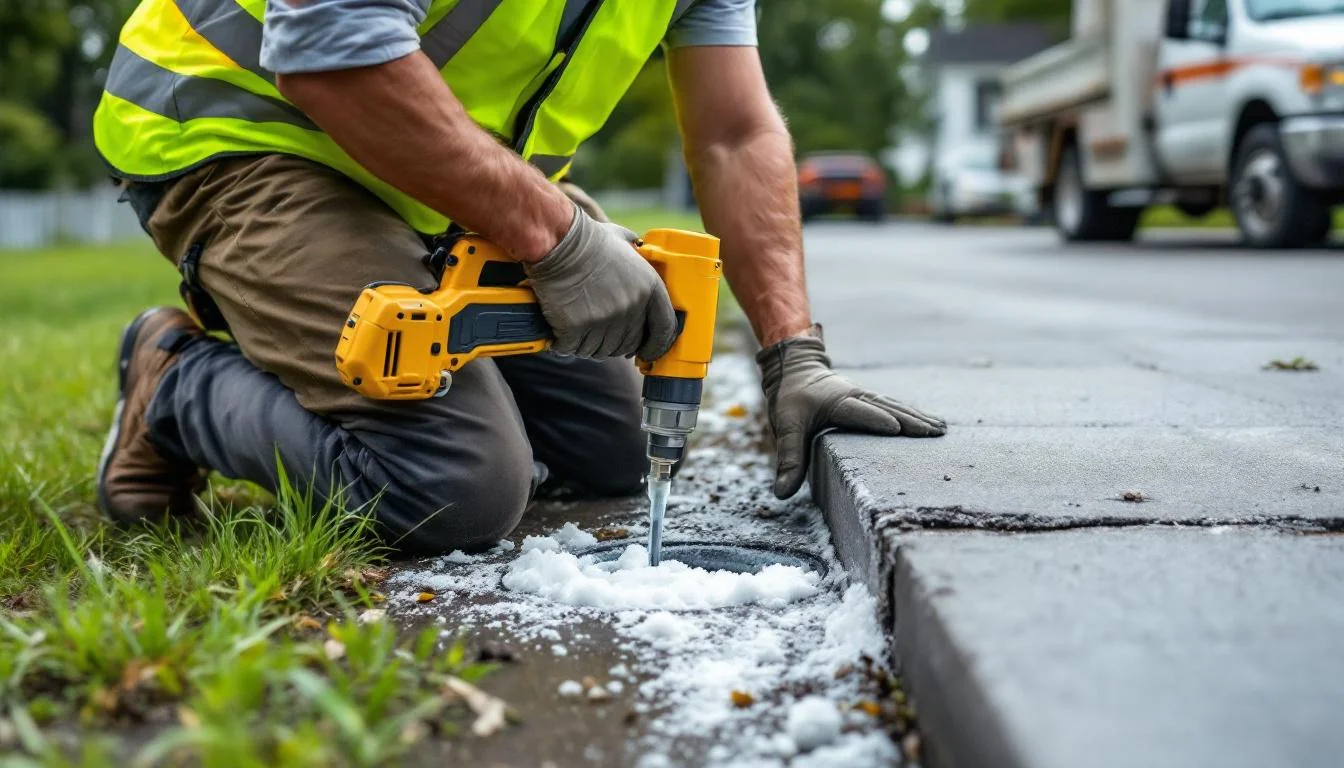
Polyjacking / Concrete Leveling
Lift and level sunken driveways, patios, sidewalks, and garage floors with polyurethane foam injection. Fast, clean, long-lasting.
Learn More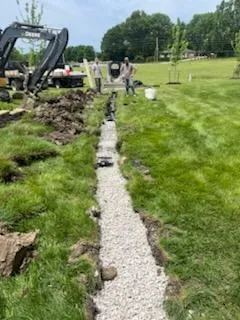
French Drains & Drainage
French drains, extended downspouts, regrading, and drain pipes to redirect water away from your foundation permanently.
Learn More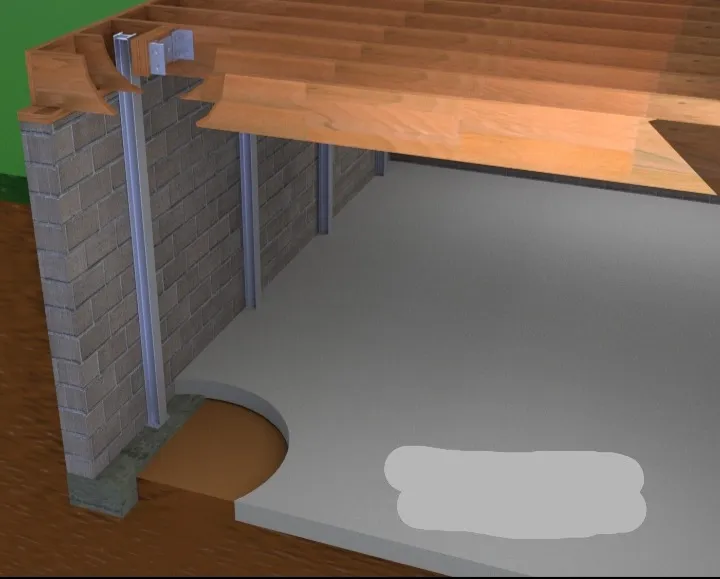
Foundation Wall Replacement
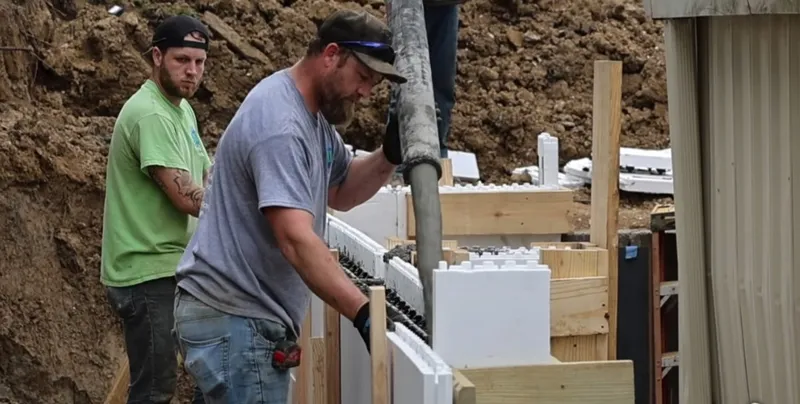
Complete removal and reconstruction of severely damaged foundation walls with new reinforced concrete, drainage, and waterproofing.
Learn MoreFoundation Repair, Waterproofing, and Block Wall Stabilization in Leawood
Leawood sits on some of Johnson County's most challenging soil for residential foundations. The Wymore-Ladoga complex underlying neighborhoods like Hallbrook and the 135th corridor carries a USDA-NRCS rating of "very high" shrink-swell, with clay content between 60% and 80%. Most Leawood homes were built between the 1980s and 2010s with deeper basements—often 9 feet or more—designed to maximize living space on the city's rolling, sloped lots. That extra depth means more wall surface exposed to lateral soil pressure, and Johnson County's Hydrologic Soil Group D classification ensures virtually all of the area's 42 inches of annual rainfall runs off rather than percolating, driving hydrostatic loads directly against your basement walls.
Leawood's foundation challenges differ from the broader Kansas City metro in two critical ways. First, the housing stock is overwhelmingly affluent construction from the last four decades, featuring walk-out basements with high-end finishes—tile, built-in cabinetry, home theaters—where even minor water intrusion creates outsized damage costs. Second, eastern Johnson County sits atop Peorian loess, a Wisconsinan-age windblown silt layer up to 17 feet thick that becomes structurally unstable when saturated. Combined with the rolling terrain along State Line Road and the graded landscapes common in premium subdivisions, water management failures here don't just cause dampness—they trigger differential settlement that propagates through longer foundation spans typical of Leawood's larger footprints.
JLB's approach in Leawood accounts for the specific realities of working on premium properties with finished lower levels and significant grade changes. Walk-out basements along the 135th corridor and Hallbrook's sloped lots require pier placement strategies that address both settlement and lateral earth loads—an 8-foot wall with a 4-foot water table can face 250 PSF of hydrostatic pressure at its base, and combined earth-plus-water loads exceeding 800 PSF. We coordinate interior waterproofing installations to minimize disruption to finished spaces, and we plan exterior access around the mature landscaping and tiered grading that define Leawood lots. Every project starts with understanding how Johnson County's clay, loess, and your specific topography interact beneath your home.
Leawood at a Glance
Foundation Repair Coverage Across Leawood's River-Adjacent Neighborhoods
JLB serves all of Leawood and surrounding Johnson County, including Hallbrook, the Mission Hills adjacent area, 135th Street corridor, and State Line neighborhoods. Whether your home sits on a rolling walk-out lot or a graded subdivision pad, our team knows the soil and terrain beneath it.
Why Are Leawood's Block Foundations Vulnerable to Johnson County Soil Pressure?
The homes in Leawood sit on a range of foundation types, each with its own vulnerabilities. Here's what our crews see most often in Johnson County.
Poured concrete basement
Poured concrete basements from Leawood's postwar building boom have had 40-70 years of Johnson County's clay pressing against them. Even solid poured walls develop cracks over that timespan — vertical fractures near corners and horizontal stress lines that indicate sustained lateral pressure from the soil.
Concrete block basement
Concrete block foundations are common in Leawood's 1950s-1980s era homes. After decades of lateral pressure from expanding clay, the mortar joints weaken and walls begin to bow inward. Horizontal cracks near the midpoint of the wall are the classic warning sign — and they need professional attention before the wall fails.
What Foundation Problems Should Leawood Homeowners Built in the 1950s–1980s Watch For?
Leawood homes built from the 1980s through 2010s with 9-foot-plus basements and finished lower levels often hide early warning signs behind drywall and trim. Johnson County's high-clay soil and 100-plus annual freeze-thaw cycles mean damage can progress quickly once it starts.
Stair-step or horizontal cracks in Leawood's block basement walls — a sign of lateral clay pressure pushing inward
Learn about Foundation Repair →Water wicking through hollow-core block walls or seeping at the floor-wall joint — Leawood's block basements are prime targets when Johnson County's soil becomes saturated
Learn about Waterproofing →Musty odors, mold, or sagging floors above crawlspaces — in Leawood's low-lying areas, ground moisture rises into the crawlspace and affects the entire home
Learn about Crawlspace Encapsulation →Doors, windows, or cabinets that stick, jam, or don't close properly — a common sign of foundation movement in Leawood homes
Learn about Foundation Repair →Who Handles Foundation Repair and Waterproofing in Leawood and Johnson County?
Numbers That Speak for Themselves
Protect Your Leawood Home Before Johnson County Clay Does More Damage
Leawood's rolling lots, deep basements, and high-clay soil create conditions where foundation problems escalate quickly—especially once spring rains saturate the Peorian loess layer. A free inspection gives you clarity on what's happening beneath your home and what it will take to fix it.
Not Sure What You're Dealing With?
Click any symptom below to learn what it means, what's likely causing it, and how we can help. Most of these are more common — and more fixable — than you'd think.
Diagonal, stair-step, or horizontal cracks in drywall, plaster, or brick usually trace back to soil movement beneath your foundation. The heavy clay soils in the Kansas City and Des Moines metros expand and contract seasonally, which can shift your foundation over time. The good news: this is very fixable with the right approach.
Water entering through floor joints, wall cracks, or seeping through porous concrete means groundwater pressure is pushing moisture into your basement. An interior drainage system and sump pump can solve this permanently — and we can usually have it done in a day or two.
When a foundation settles unevenly, it can shift your home's frame just enough to make doors and windows bind. This is one of the earlier signs of foundation movement — and catching it early often means a simpler, less expensive repair.
That musty smell is moisture. Up to 40% of the air in your home rises from below — from your crawlspace and basement. If there's excess humidity down there, it affects your whole home. Encapsulation seals it out, and you'll notice the difference in your air quality right away.
Floors that slope toward the center or an exterior wall usually mean the support structure underneath needs attention. Push piers can stabilize your foundation and often lift it back to level — giving your floors a second life.
When soil washes out or compacts beneath a concrete slab, the slab drops and becomes uneven. Polyjacking uses expanding polyurethane foam to fill the void and lift the concrete back to grade — usually in under a day, with no heavy equipment needed.
Water collecting near your foundation means your grading or drainage isn't directing water away effectively. French drains, regrading, extended downspouts, and drain pipes can redirect water away from the house — protecting your foundation for the long haul.
A basement wall that has bowed more than 2 inches inward, shifted off its footing, or shows multiple structural cracks may have moved beyond what bracing can fix. When carbon fiber straps, I-beams, or wall anchors are not enough, the wall needs to be removed and rebuilt with reinforced concrete. This is the last resort — but it is the permanent fix when the wall itself is compromised.
Why Do Leawood Homeowners Choose JLB for Foundation and Drainage Work?
Deep Basement Expertise
Leawood's 9-foot-plus basement walls face greater lateral loads than standard 8-foot pours common elsewhere in the metro. We engineer reinforcement and waterproofing solutions sized for the actual pressures Johnson County clay delivers at depth—up to 800 PSF combined earth and hydrostatic force on deeper walls.
Finished Space Protection
Most Leawood basements aren't unfinished utility spaces—they're home theaters, wine cellars, and guest suites. Our interior waterproofing and drain tile installations are planned to limit demolition of existing finishes, and we coordinate with your contractors for seamless restoration of Leawood's high-end lower levels.
Sloped Lot Specialists
Leawood's rolling terrain creates walk-out basements with exposed walls that face different soil pressures on each side. From Hallbrook's hillside estates to graded lots along the 135th corridor, we design pier layouts and drainage systems that account for asymmetric loading and grade-driven water flow unique to your property.
Johnson County Soil Knowledge
The Wymore-Ladoga complex beneath Leawood carries USDA "very high" shrink-swell ratings with 60-80% clay. Add the Peorian loess layer—up to 17 feet thick in eastern Johnson County—that destabilizes when saturated, and you need a team that reads soil conditions, not just cracks. We do both.
What Leawood, KS ZIP Codes Does JLB Cover for Foundation Repair?
Which Leawood Neighborhoods Does JLB Serve for Foundation Work?
Leawood's neighborhoods range from established estates in Hallbrook to newer construction along the 135th corridor and properties bordering Mission Hills along State Line. Each area presents distinct foundation and waterproofing challenges shaped by lot grading, home era, and proximity to Johnson County's drainage patterns.
What Our Customers Say
"We had cracks running up our walls and doors that wouldn't close. JLB came out, explained exactly what was happening with the soil under our house, and had the piers installed in two days. Floors are level again. Wish we hadn't waited so long."
"Three other companies gave us the runaround. JLB showed up, did a thorough inspection, and gave us a straight answer. The repair held up through an entire Missouri winter with zero new cracking."
"Our crawlspace was a mess — moisture, mold, the works. JLB encapsulated it AND spray-foamed our basement in the same project. The difference in our home's air quality is incredible. Great value for the price."
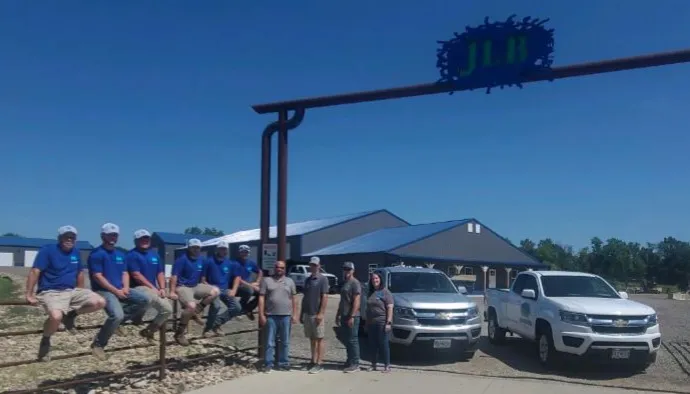
Real Team. Real Work.
Right Here in Kansas City & Des Moines.
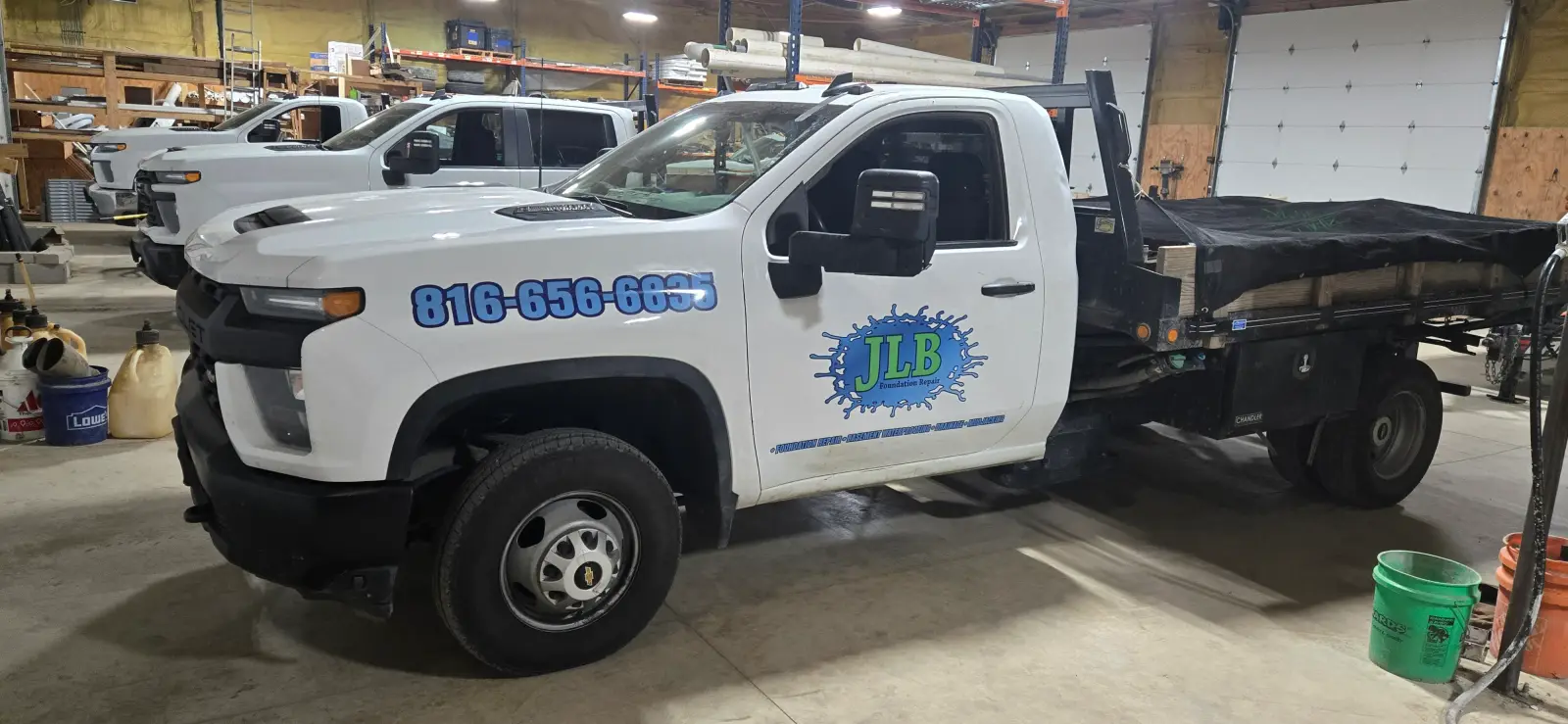
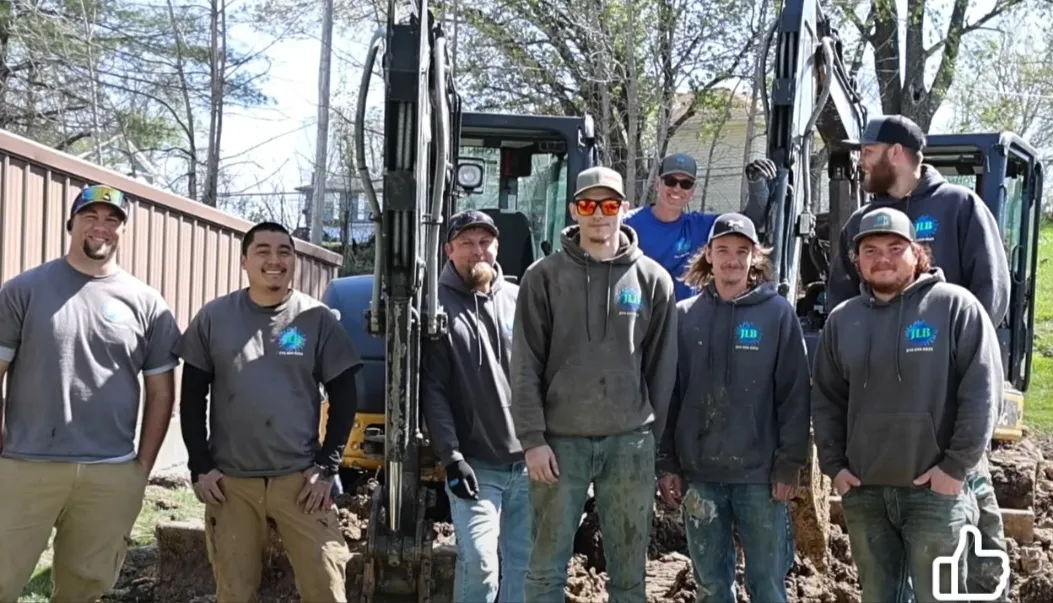
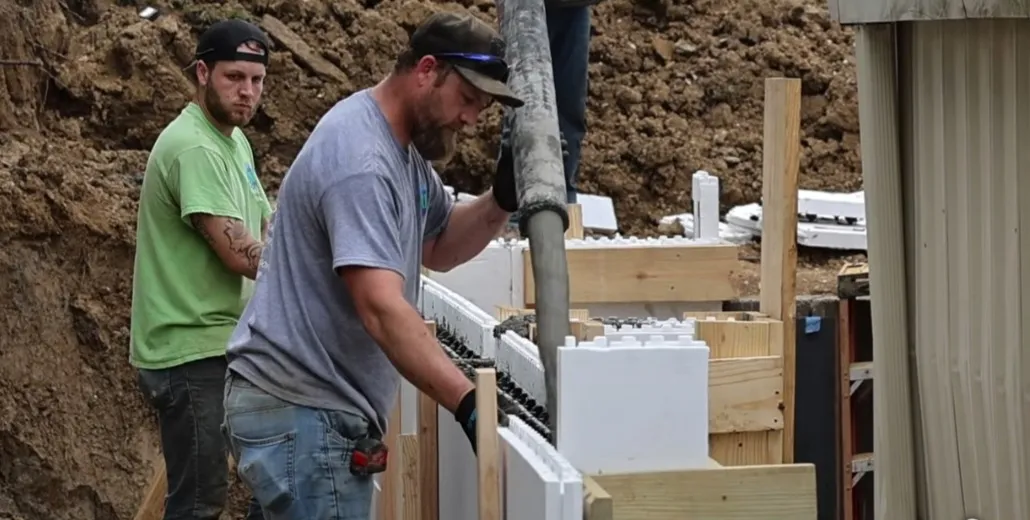
Real Projects. Real Results.
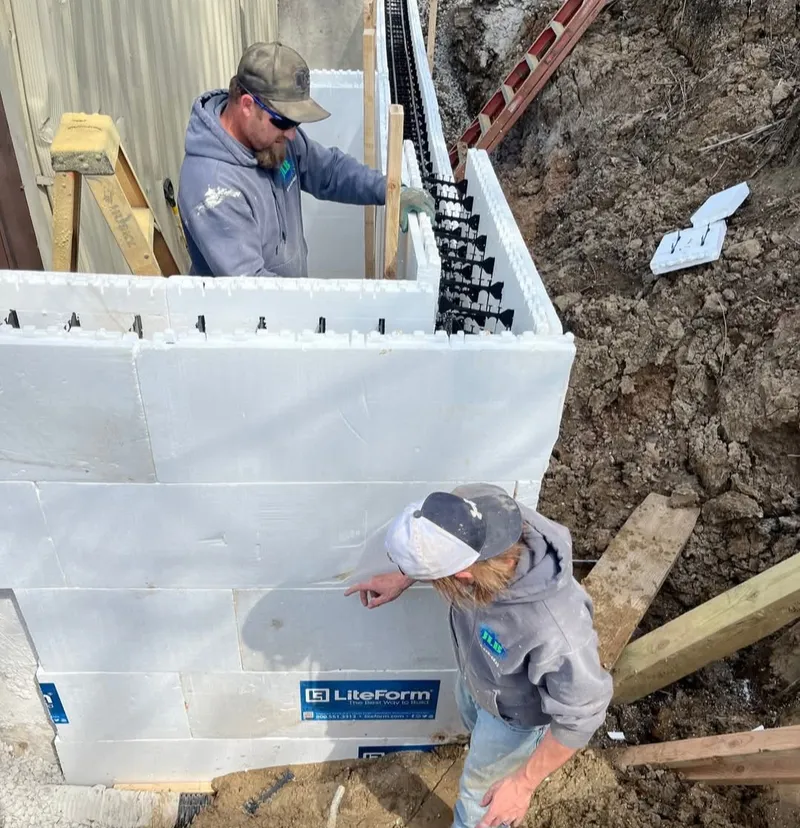
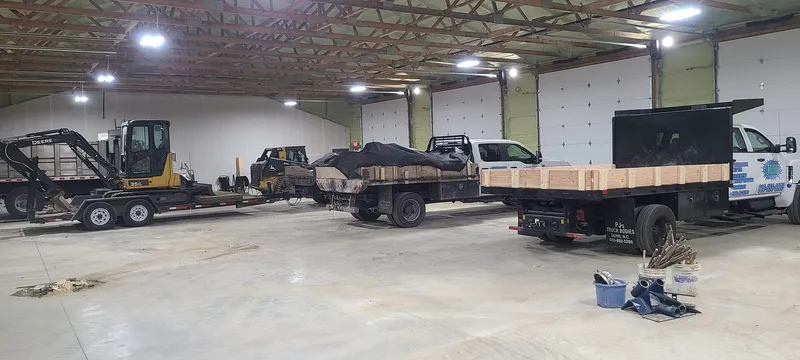
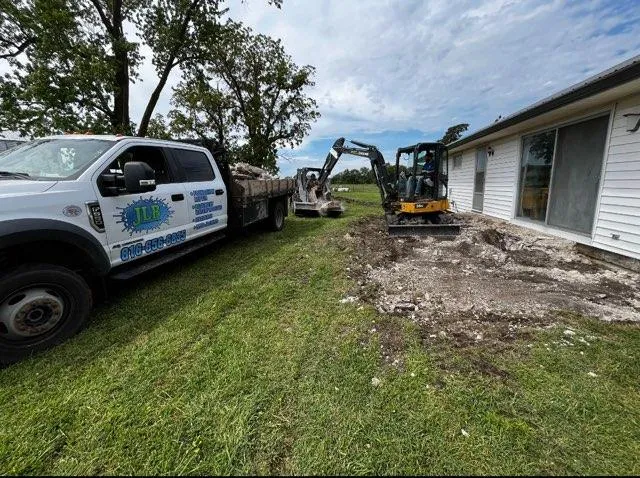
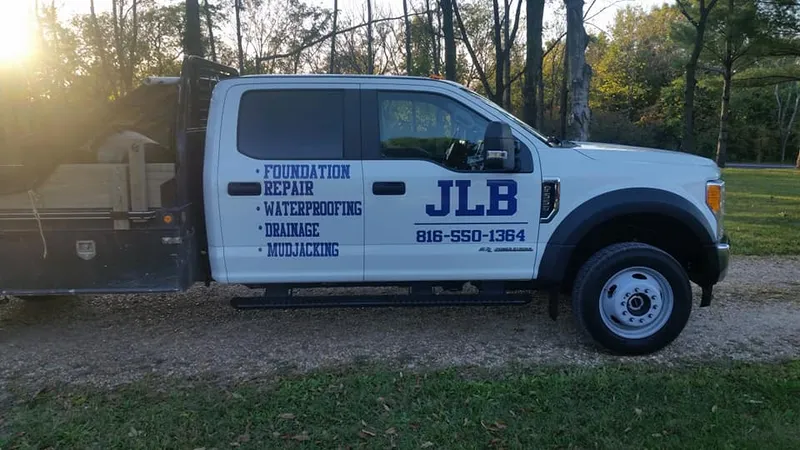
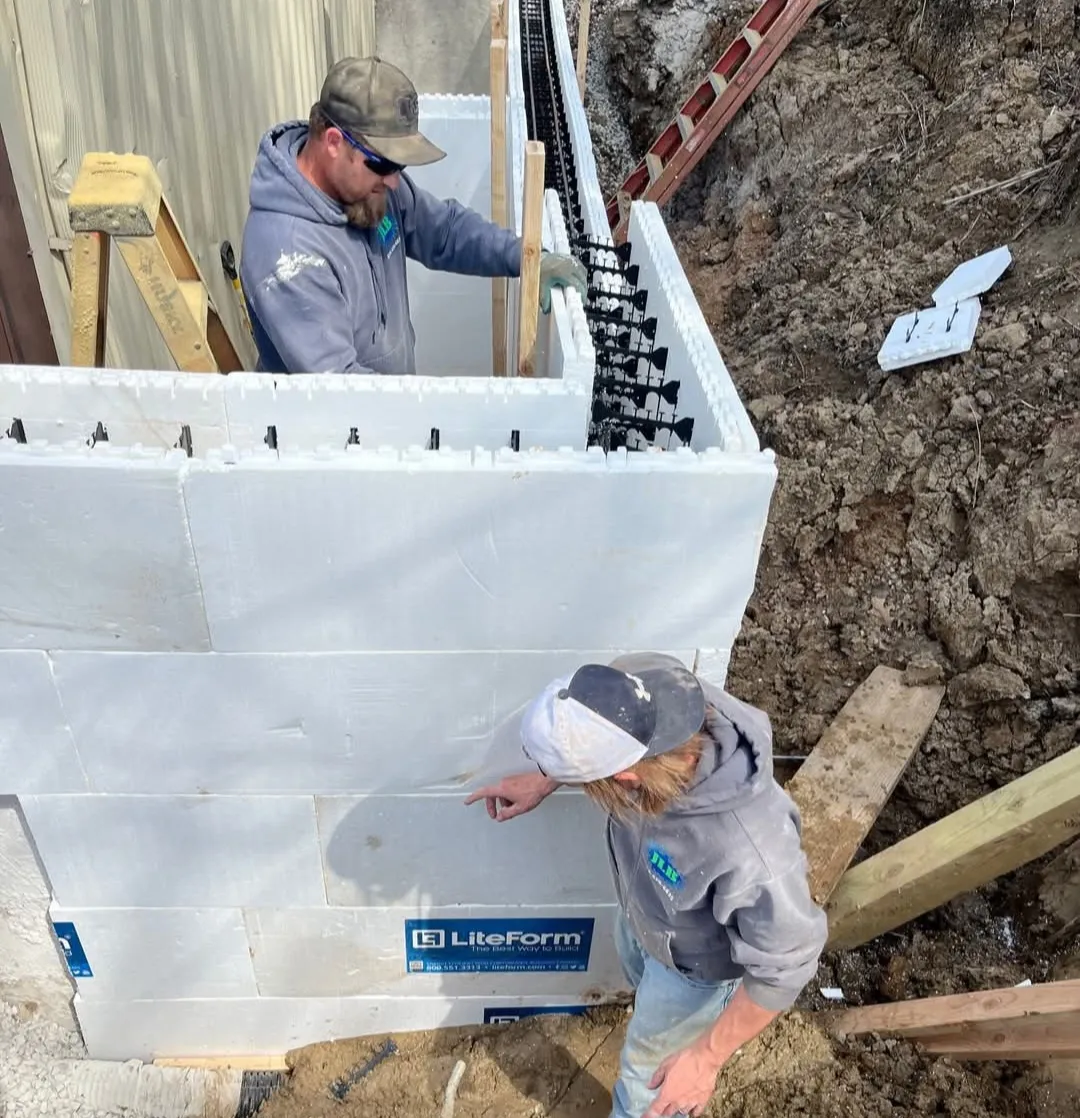
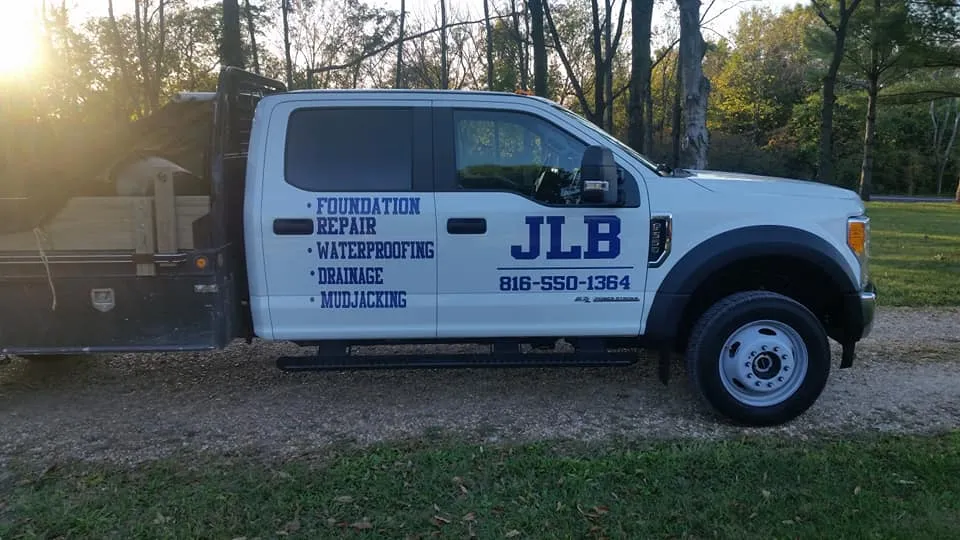
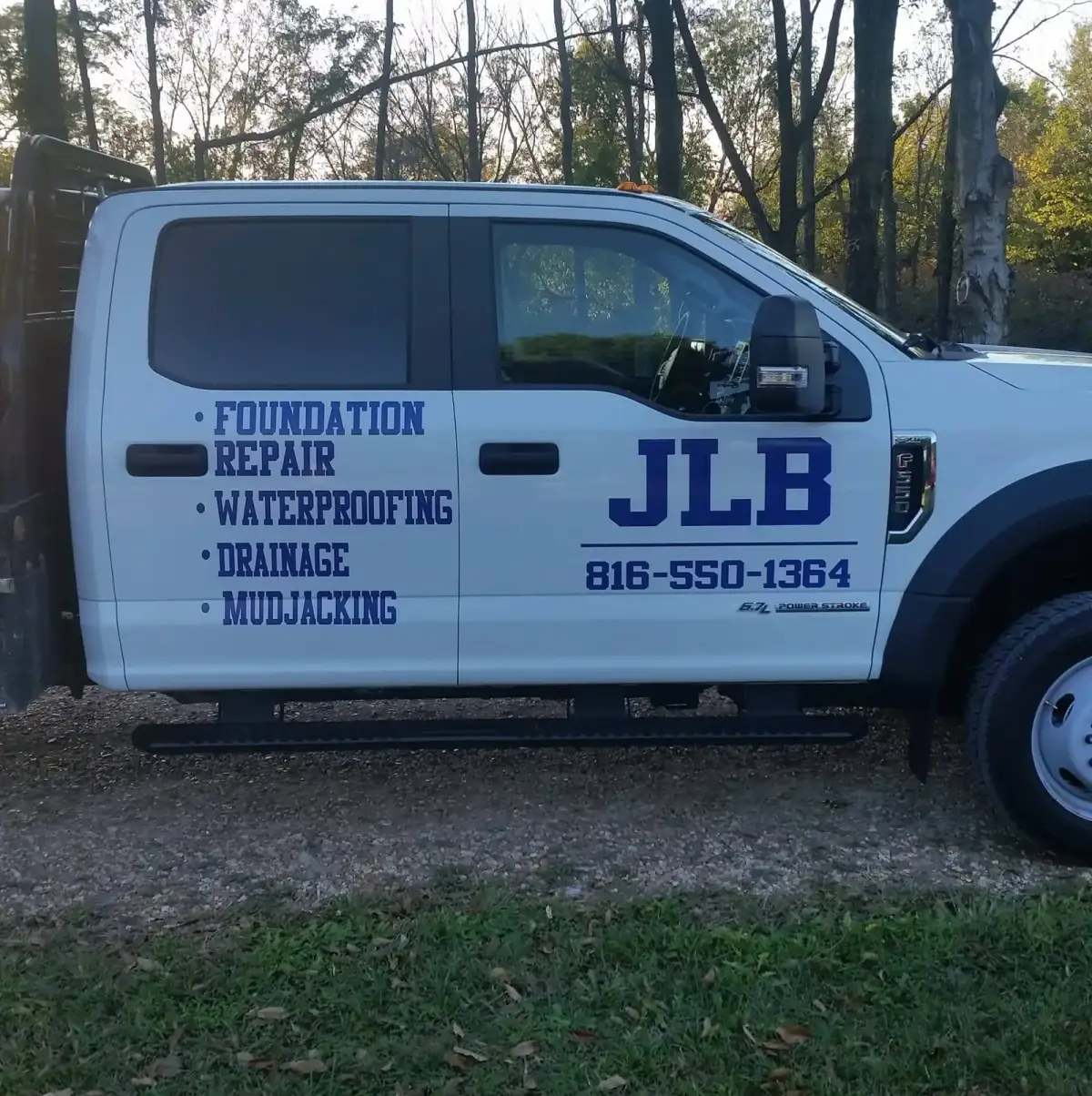
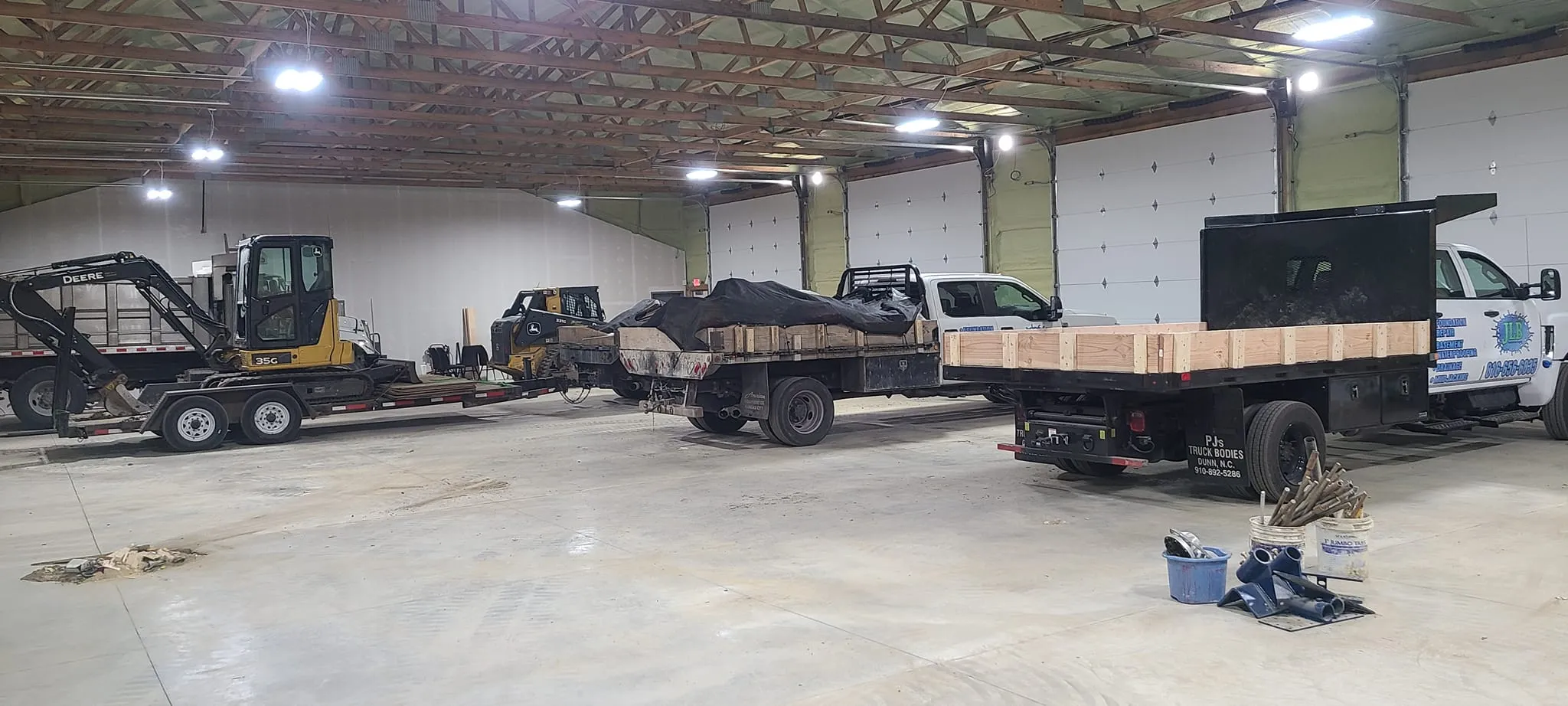
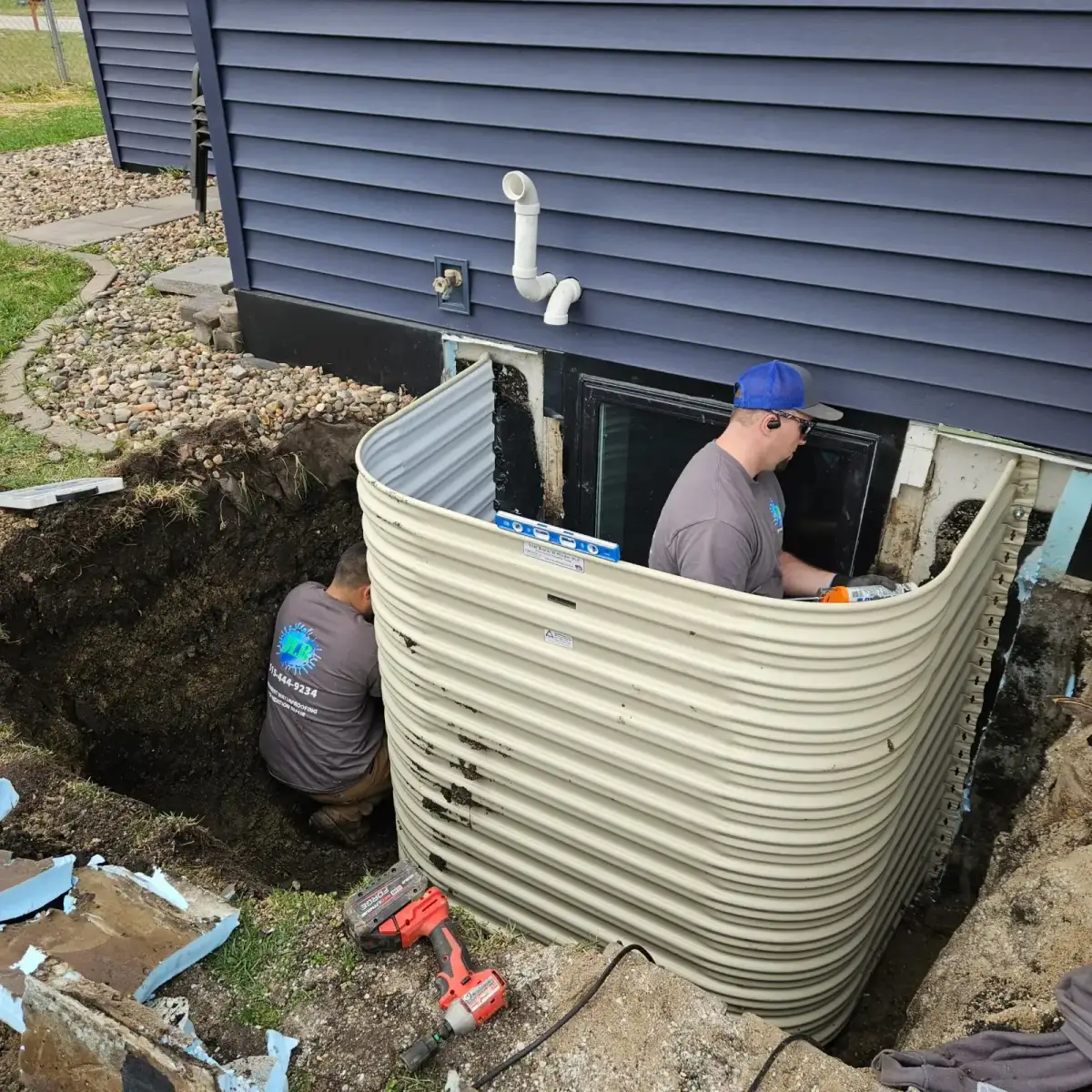
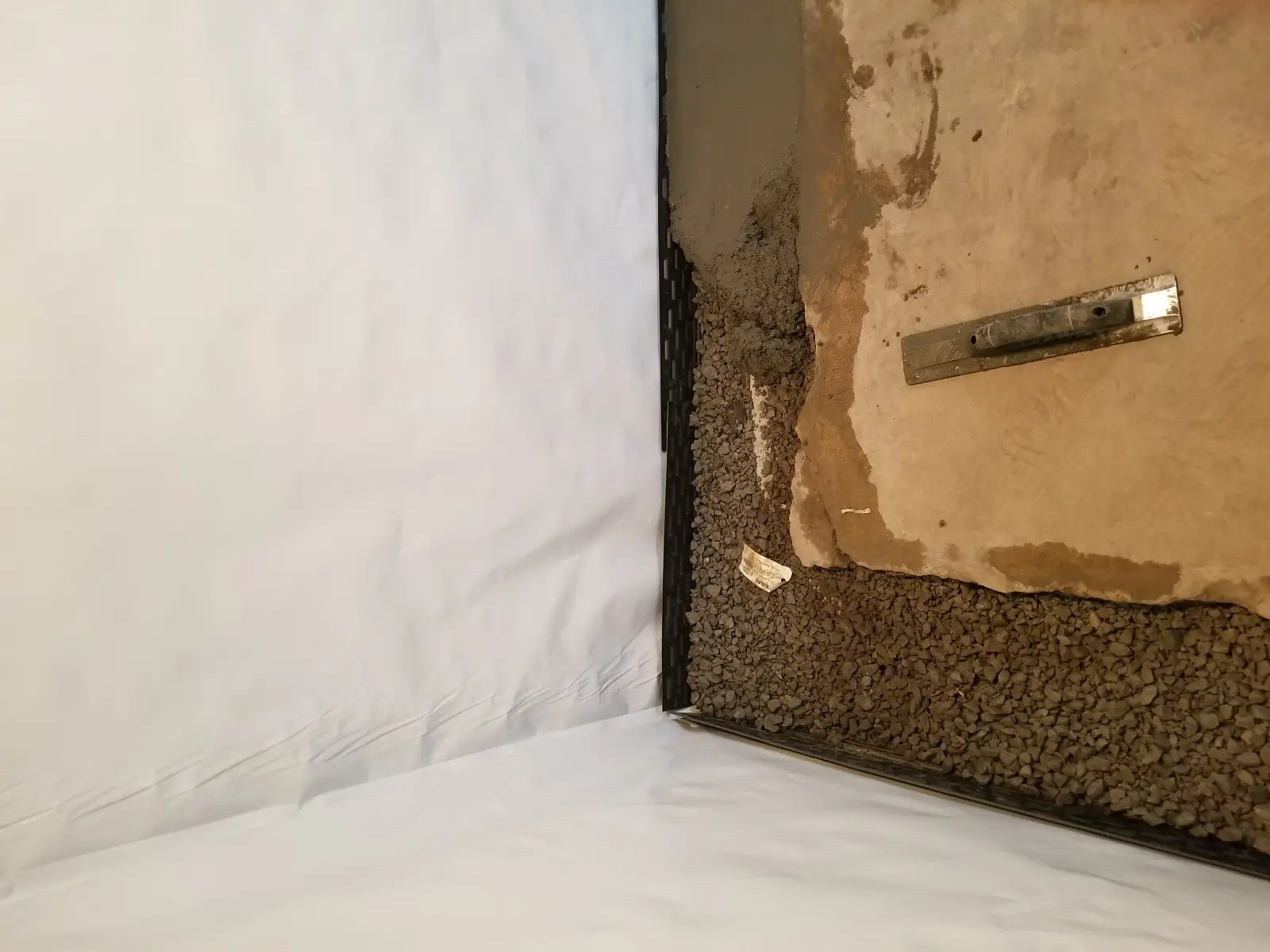
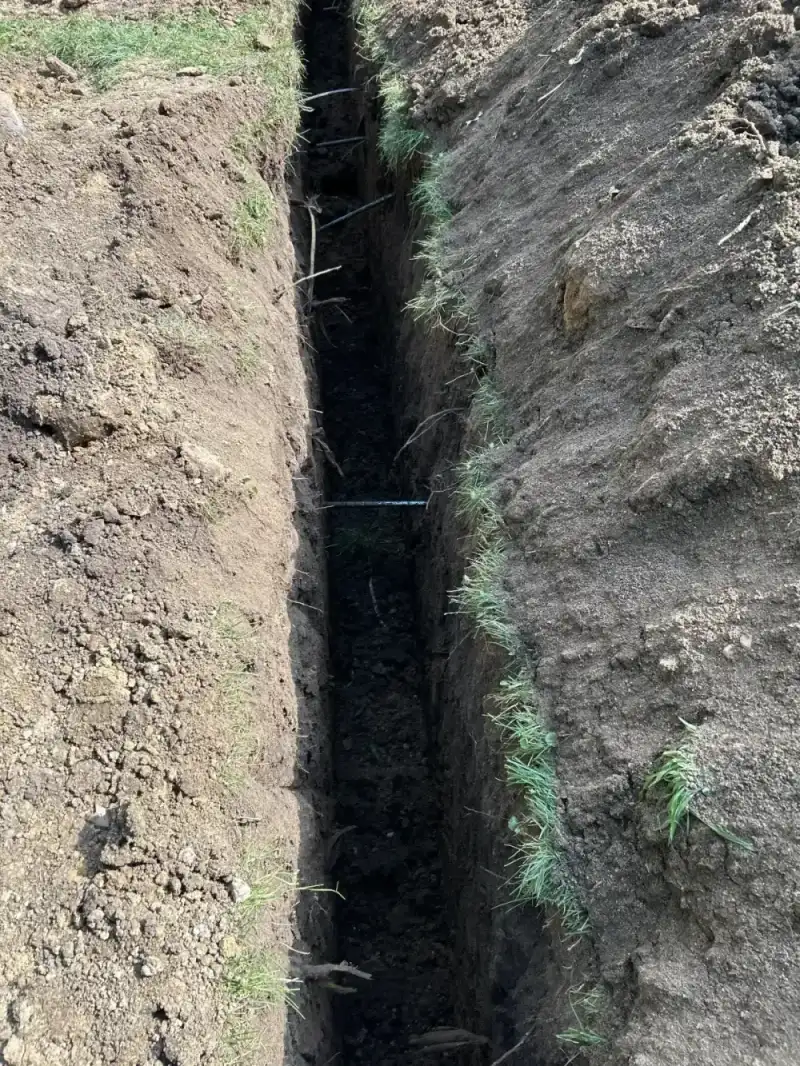
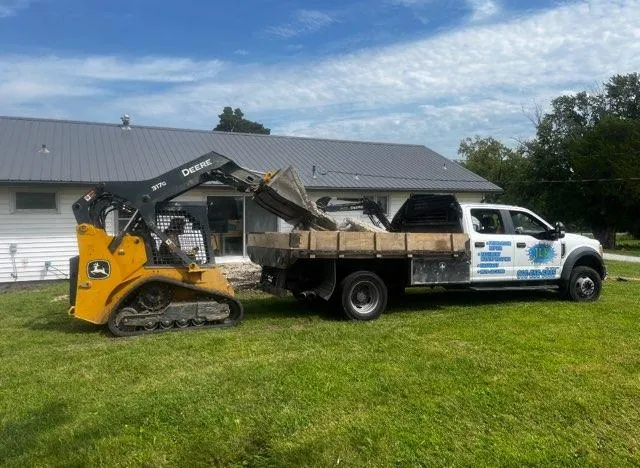
Every photo is from an actual JLB job site — not a stock photo. See the work we do every day across Kansas City and Des Moines.
Foundation Repair & Waterproofing Questions for Leawood Homeowners
Walk-out basements, which are extremely common in Leawood due to the city's rolling terrain, create an asymmetric loading condition. The uphill walls on a walk-out may have 8 or more feet of soil bearing against them while the exposed downhill wall carries almost none. Johnson County's Wymore-Ladoga clay—rated "very high" shrink-swell with 60-80% clay content—expands unevenly around the structure as moisture levels change. This differential pressure can exceed 800 PSF on the buried side. Over time, the loaded walls bow inward or shift while the exposed wall remains stable, creating diagonal cracking at the transition points. Homes along Hallbrook's slopes and the rolling lots south of 135th Street are especially prone to this pattern. Carbon fiber straps ($350-$1,000 each) or wall anchors ($400-$700 each) typically address bowing, while piers handle settlement on the loaded side.
Peorian loess is a Wisconsinan-age windblown silt deposit that reaches up to 17 feet thick in eastern Johnson County, directly beneath Leawood's neighborhoods along State Line Road and into the Mission Hills adjacent areas. In dry conditions, loess is reasonably stable and can bear moderate loads. The problem is saturation: when Johnson County's 42 inches of annual rainfall—peaking at 5.7 inches in May—soaks through the overlying clay, the loess loses structural integrity and compresses unevenly. Because Leawood homes from the 1980s-2010s often have larger footprints with longer foundation spans, even modest differential settlement across the loess layer translates to visible cracking, door misalignment, and floor slope. Push piers driven through the loess to competent bearing strata ($1,250-$2,500 per pier) are the standard correction for settlement caused by this layer.
Interior basement waterproofing in Leawood typically runs $4,000-$7,000 for a complete system, with drain tile installed at $49-$59 per linear foot. However, Leawood homes carry an additional cost factor that many homeowners underestimate: the finished space. Most basements in Hallbrook, the 135th corridor, and State Line area homes feature high-end finishes—engineered flooring, custom built-ins, full bathrooms. Interior drain tile installation requires removing a strip of concrete along the perimeter, which means selective demolition and subsequent restoration of those finishes. We plan our cut lines and sump locations to minimize disruption, but budgeting for finish restoration on top of the waterproofing system itself is essential. Johnson County's Hydrologic Soil Group D rating means your soil infiltrates almost nothing—virtually all rainfall becomes runoff and hydrostatic pressure against your walls, making interior drainage the most reliable long-term solution.
Newer Leawood homes are not immune—in fact, the construction patterns of the 2000s and 2010s create specific vulnerabilities. These homes tend to have deeper basements (9 feet or more), larger footprints with longer unsupported wall spans, and extensive landscape grading that reshapes natural drainage. Johnson County's underlying clay didn't change because a home was built recently. The Wymore-Ladoga complex still cycles through extreme shrink-swell, and the 36-inch frost depth still subjects shallow footings to heave pressure across 100-plus freeze-thaw cycles annually. Newer homes along the 135th corridor frequently show settlement within 10-15 years as the graded and compacted fill soils around the foundation consolidate unevenly. The average Kansas City foundation repair project costs approximately $4,500, and addressing problems early—before they stress finished lower-level spaces—is significantly less disruptive.
While full basements dominate Leawood's housing stock, a meaningful number of homes—particularly walk-out designs along Hallbrook's slopes and split-level configurations near State Line—incorporate partial crawlspaces beneath additions, sunrooms, or garage transitions. These crawlspaces sit in Johnson County's high-moisture environment where the stack effect pulls 40-50% of your first-floor air from below. In an unsealed crawlspace, relative humidity typically reaches 77%, well above the 60% mold threshold. Encapsulation with a sealed vapor barrier drops that to approximately 52%, per the Advanced Energy study. Costs in the Leawood area range from $5,500-$8,000 for most residential crawlspaces, and insulation materials may qualify for a federal 30% tax credit. If your Leawood home has even a small crawlspace section, it's worth inspecting—moisture problems there migrate upward into your finished living space.
Leawood's premium subdivisions feature extensive landscape grading to create level building pads, tiered yards, and retaining wall systems on the city's naturally rolling terrain. This grading introduces two problems that homes on natural Johnson County terrain don't face as severely. First, fill soils compacted during construction consolidate over 10-20 years, creating settlement zones adjacent to the foundation that funnel water toward the structure. Second, regraded slopes alter natural drainage paths, often concentrating runoff against basement walls that weren't designed for that volume. With Johnson County clay classified as Hydrologic Soil Group D—the lowest infiltration rate—graded surfaces shed water even faster than undisturbed ground. Homes in Hallbrook and newer 135th corridor developments are particularly affected. French drain systems, proper grading maintenance, and interior waterproofing together address the compounding water management failures that Leawood's sculpted lots create.
Schedule Your Free Leawood Foundation Inspection
Tell us about your Leawood home—the age, basement type, and what you're seeing. Whether you're in Hallbrook, along the 135th corridor, or near State Line, we'll schedule a thorough assessment tailored to Johnson County's soil conditions and your property's specific terrain.
Get Your Free Estimate
Takes 30 seconds. We'll call within 24 hours.
Thank You!
We received your request. A foundation specialist will contact you within 24 hours to schedule your free estimate.
Our Locations
We're always close enough to help — our crews are local to your area.
JLB Foundation Repair & Basement Waterproofing — Leawood
10308 State Line Rd Suite 300Leawood, KS, 66206(913) 660-6308 View on Google Maps
JLB Foundation Repair & Basement Waterproofing — Kansas City
111 NE 72nd St, Ste 111Kansas City, MO, 64119(816) 408-3651 View on Google Maps
Stop the Damage. Get Answers Today.
A free estimate takes 45 minutes and tells you exactly what's going on under your house — and exactly what it takes to fix it.