Concrete Retaining Walls in Altoona, Iowa Walls That Do the Draining a Flat Lot Never Will on Its Own
Engineered drainage, graded surface, and footings below frost, poured by one Altoona crew on flat ground.

Free 45-Minute Analysis + Written Report
Get a precise analysis of your concrete project, and a clear estimate on what the work will cost.
Takes 30 seconds. We'll call within 24 hours.
Thank You!
We'll be in touch within 24 hours.
Concrete Retaining Walls in Altoona, Iowa, Built to Drain Flat-Lot Hydrostatic Pressure
On a flat lot and a sloped lot, a wall fights the same enemy in different forms: water that will not leave. The persistent hydrostatic pressure from poorly-draining till is the load that pushes most walls out of plumb, and on Altoona's flat ground east of Des Moines that water has nowhere to run on its own. A hillside at least drains by gravity; a flat lot lets water sit and build pressure against the back of the wall. So the wall has to do the draining the ground will not.
A poured wall holds that standing pressure better than block. One continuous rebar-reinforced piece sends the soil's push into the footing instead of leaning on stacked units, which is what keeps it from creeping on heavy till.
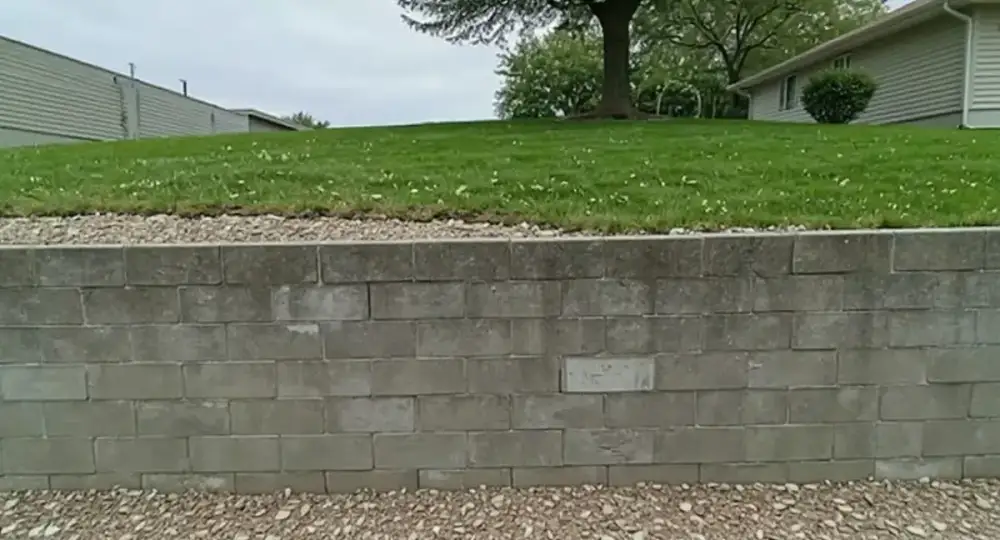
Concrete Retaining Walls JLB Pours in Altoona
Structural concrete retaining walls — footings below the frost line, rebar reinforcement, and full drainage with weep holes and gravel backfill.
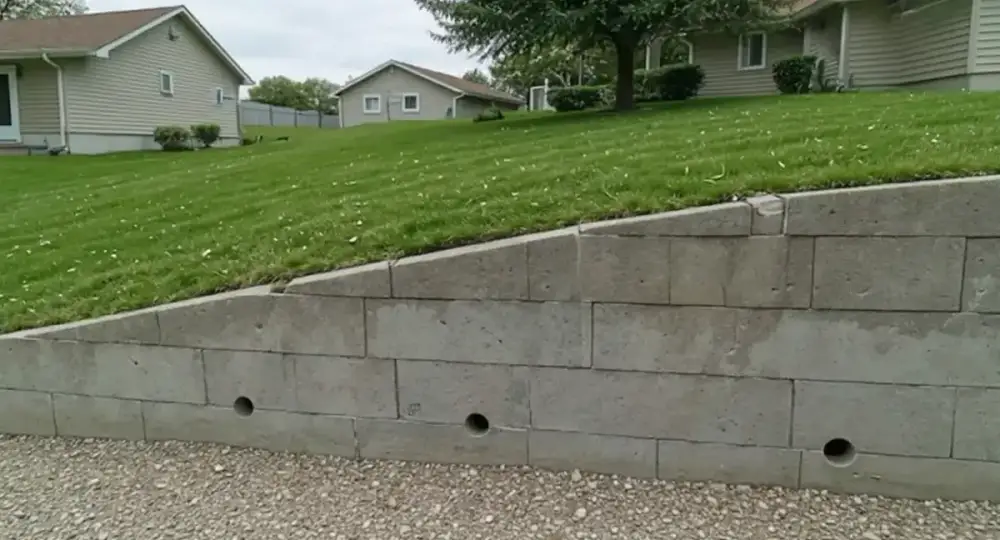
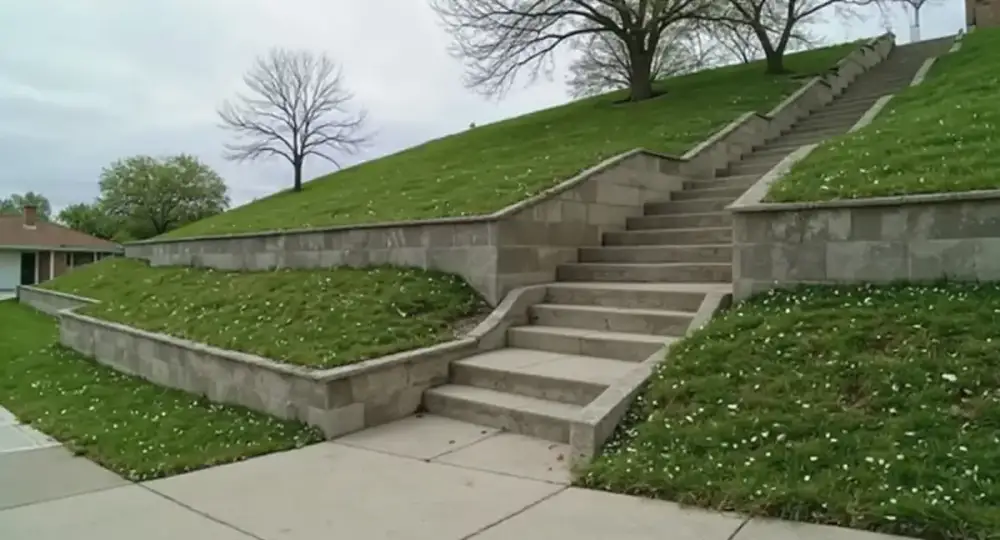
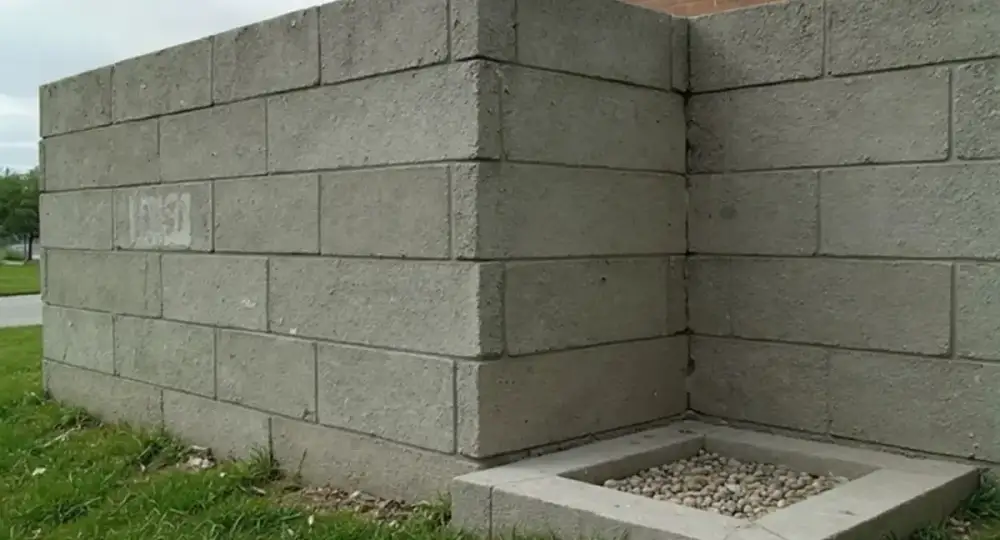
Drainage as the entire job on flat ground
Flat ground makes drainage the whole point.
We build weep holes through the face, a gravel chase behind the wall, and drain tile at the footing to actively move water out, because the lot will not shed it on its own. On Altoona's plains, that engineered path is the only way the water leaves.
Free-draining gravel keeps the path open.
We place gravel against the wall rather than repacking the excavated till, so water reaches the tile instead of sitting at the concrete. On ground that drains this slowly, that choice keeps pressure from ever getting a foothold.
Surface grading that helps the wall
What happens on top matters as much as what is buried.
We pitch the surrounding grade so rain runs away from the wall rather than ponding behind it, because on flat terrain standing surface water finds its way down to the back of the wall. Grading and subsurface drainage work as one system.
On the open east side, every inch of fall counts.
Where the metro meets Iowa's farm country there is little natural slope, so we shape what fall we can to move water off the lot.
Footings set below frost
The footing goes below 42 inches on bearing soil.
Wet flat ground heaves hard when it freezes, so a shallow footing lifts and tips the wall. We dig below frost depth so the wall stays plumb through Altoona's winters.
One crew handles the whole job.
Excavation, footing, stem, drainage, backfill in lifts, no handoffs. The free site walk shows where your water goes before we quote.
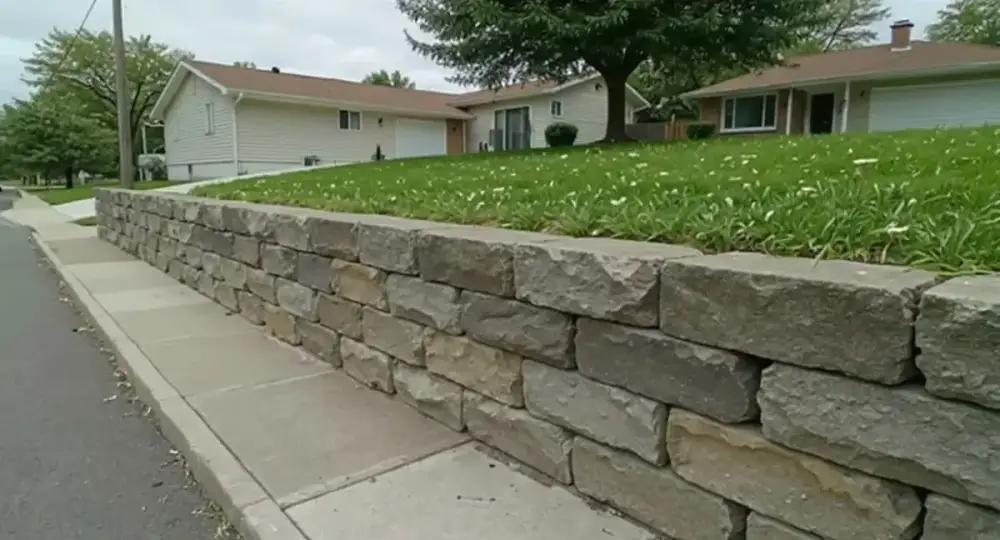
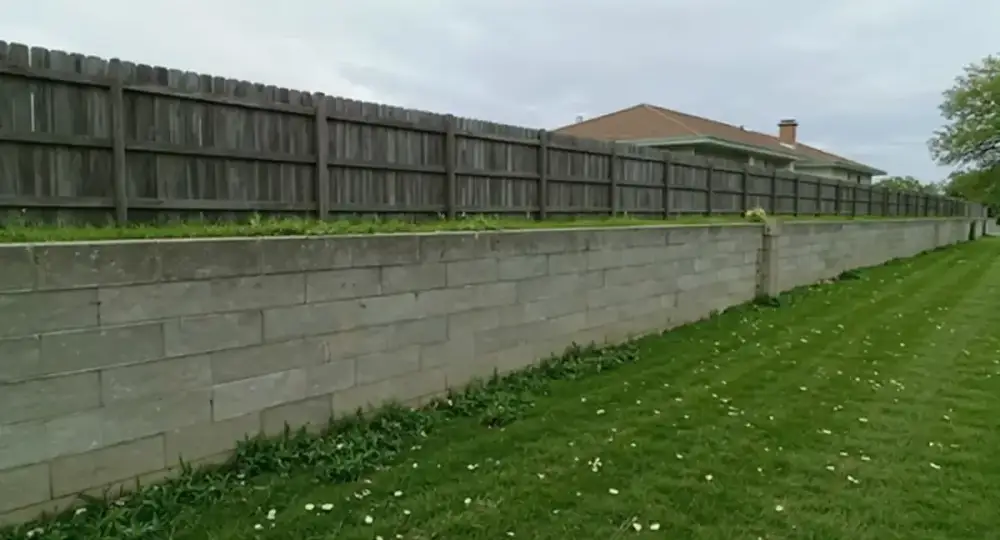
A graded yard pitching away from a reinforced wall on flat Altoona ground, drain tile carrying off what the lot cannot.
What Makes Altoona Concrete Different?
Central Iowa concrete endures 100 to 120 freeze-thaw cycles in a single winter. Each cycle expands trapped moisture and opens micro-fractures, which is why air-entrained mixes and correct joint placement matter far more here than in milder climates.
How JLB Handles Retaining Walls in Altoona
Free On-Site Inspection
We measure the area, check how it drains, and assess the base before quoting.
Tear-Out & Haul-Off
The old driveway comes out and we remove the debris so we start on solid ground.
Subgrade Prep
We compact and grade the base so the slab bears evenly over central-Iowa soil.
Forming & Reinforcement
Forms are set to grade and we add rebar or mesh where the load calls for it.
Air-Entrained Pour
We place a 5-7% air-entrained mix built for Iowa freeze-thaw.
Finish & Saw-Cut Joints
Broom or decorative finish, then control joints cut at planned intervals.
Cure & Protect
We protect the pour while it cures so it gains full strength without scaling.
Why Altoona Homeowners Choose JLB for Retaining Walls
Footings set below Iowa's 42-inch frost line
Rebar-reinforced for structural strength
Full drainage systems — weep holes, gravel backfill, and drain tile — to manage persistent hydrostatic pressure from the till
JLB's own in-house crew
Concrete Retaining Walls in Altoona — FAQ
A hillside drains by gravity, but a flat lot lets water sit and build hydrostatic pressure against the back of the wall. The wall has to do the draining the ground will not, with an engineered weep-hole, gravel, and drain-tile system.
With weep holes, a gravel chase, and drain tile that actively carry water out, plus free-draining gravel backfill that keeps the path open. On slow-draining till, that engineered path is the only way water leaves.
Yes. On flat ground, ponding surface water finds its way to the back of the wall. JLB pitches the surrounding grade so rain runs away from the wall, working with the subsurface drainage as one system.
Only if the footing is too shallow. Wet flat ground heaves hard when it freezes, so JLB sets footings below the 42-inch frost line on bearing soil to keep the wall plumb through winter.
A poured wall is one rebar-reinforced piece that sends standing soil pressure into the footing, while stacked block relies on the weight of each unit. On heavy, water-holding till, the poured wall resists creep far better.
Get Your Free Retaining Walls Estimate in Altoona
Fill out the form and the JLB team will reach out within 24 hours. Or call us now at (515) 717-8560.
Retaining Walls Near You
Our Central Iowa Offices
Local crews serving the Des Moines metro. We come to you.
JLB Basement Waterproofing & Foundation Repair — Des Moines
97 Indiana Ave Suite #1Des Moines, IA, 50314(515) 717-8560 View on Google Maps
Ready to Pour? Get a Free Estimate.
A free on-site estimate tells you exactly what your retaining walls project takes — and what it costs. Call (515) 717-8560.