Concrete Retaining Walls in Ames, Iowa Walls Mixed and Drained to Stand Up to Saturated Ground
Air-entrained concrete, gravel backfill, and drain tile over footings below frost, poured by one Ames crew.

Free 45-Minute Analysis + Written Report
Get a precise analysis of your concrete project, and a clear estimate on what the work will cost.
Takes 30 seconds. We'll call within 24 hours.
Thank You!
We'll be in touch within 24 hours.
Concrete Retaining Walls in Ames, Iowa, Built to Drain Saturated River-Bottom Ground
The retaining-wall problem in Ames starts with water already in the ground. The city sits where the Skunk River meets Squaw Creek, and those bottoms stay saturated through wet stretches, keeping the water table high and the soil heavy behind any wall. Ames also sits in climate zone 5A, cold winters and humid summers, so the same wall faces standing groundwater and a hard annual freeze. Mix and drain it for the water and the wall holds; ignore the water and the saturated soil tips it.
Wet soil pushes harder than dry soil. Saturated ground weighs more and presses sideways with more force, so we pour walls as one rebar-reinforced piece that carries that load down into the footing.
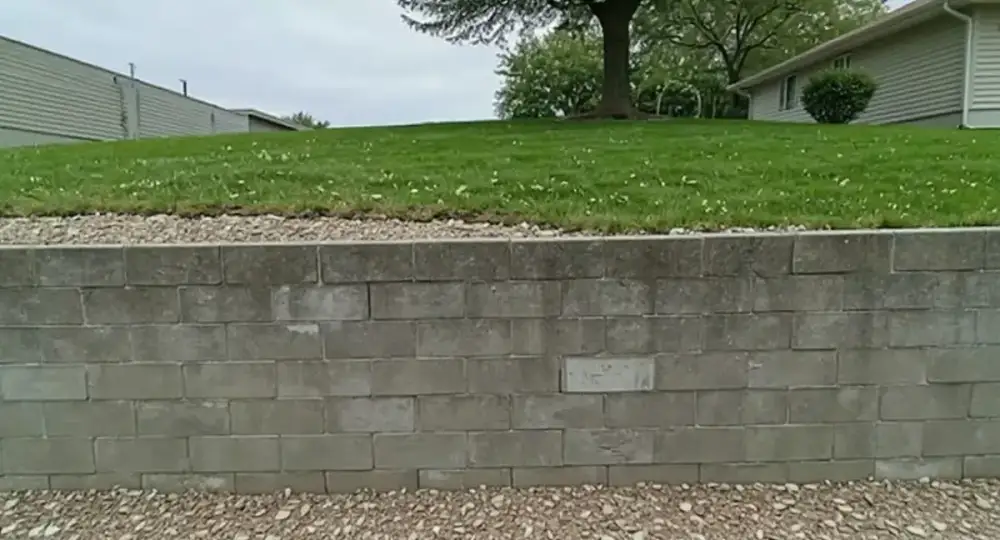
Concrete Retaining Walls JLB Pours in Ames
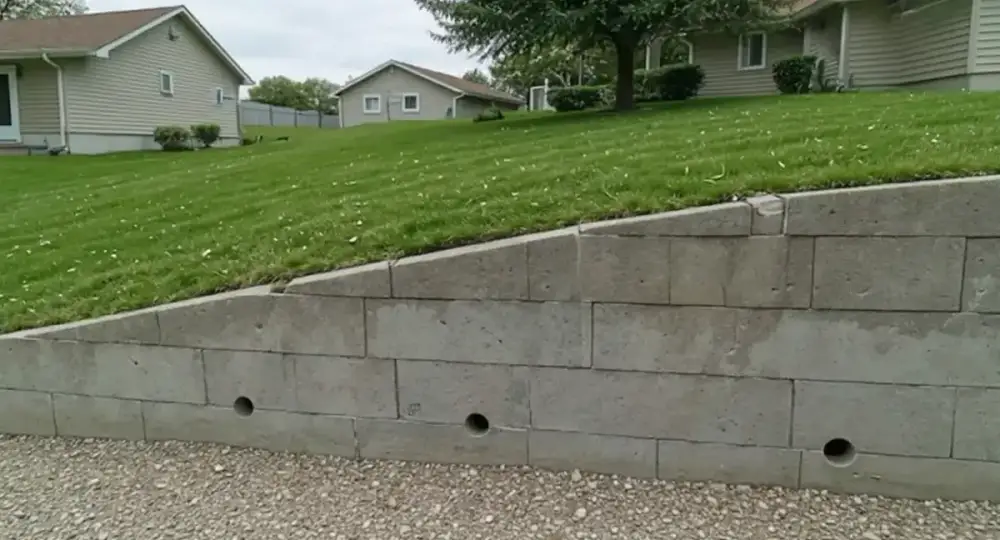
Structural concrete retaining walls — footings below the frost line, rebar reinforcement, and full drainage with weep holes and gravel backfill.
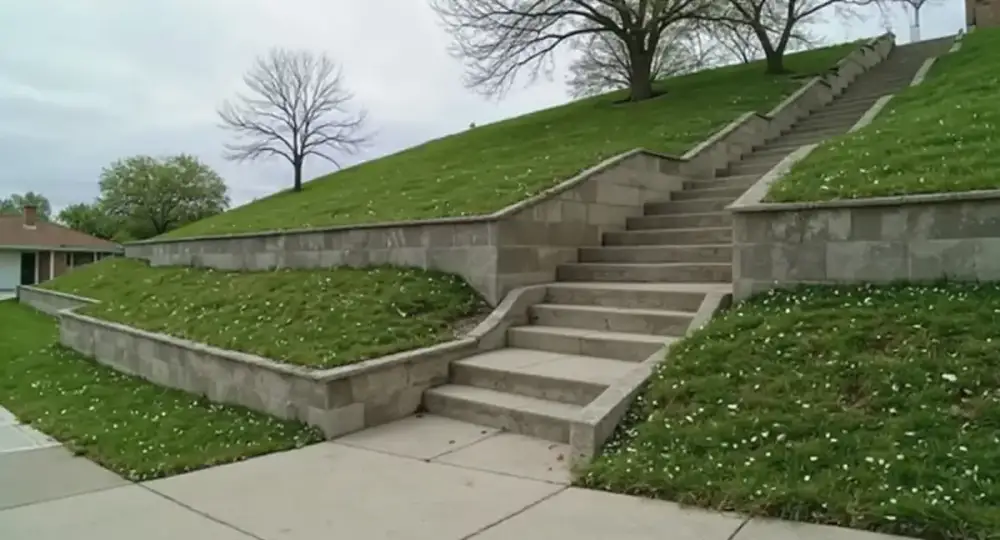
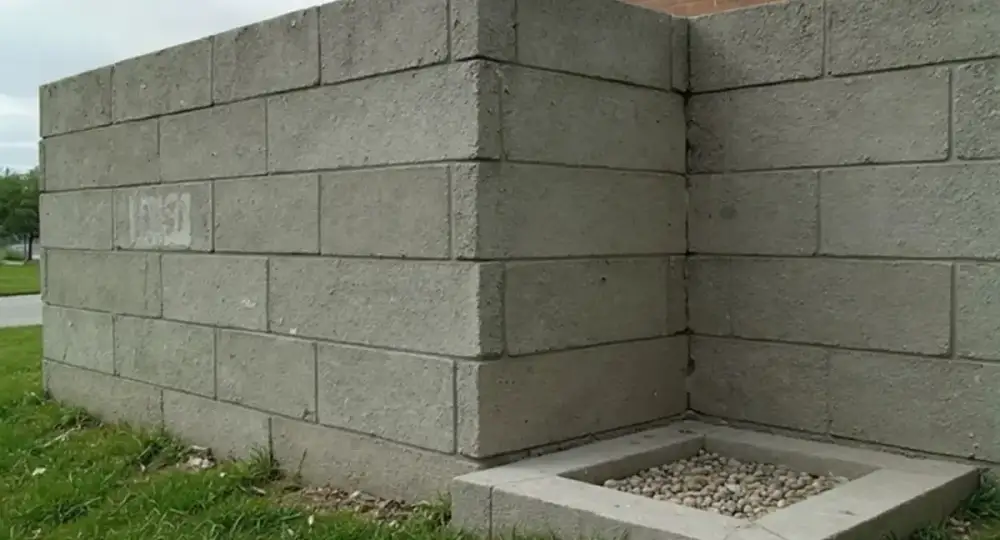
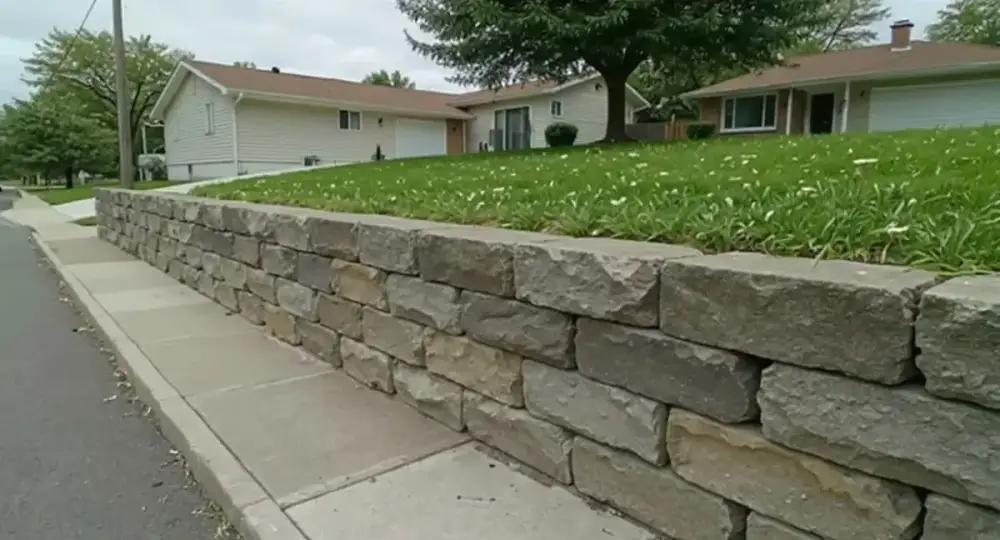
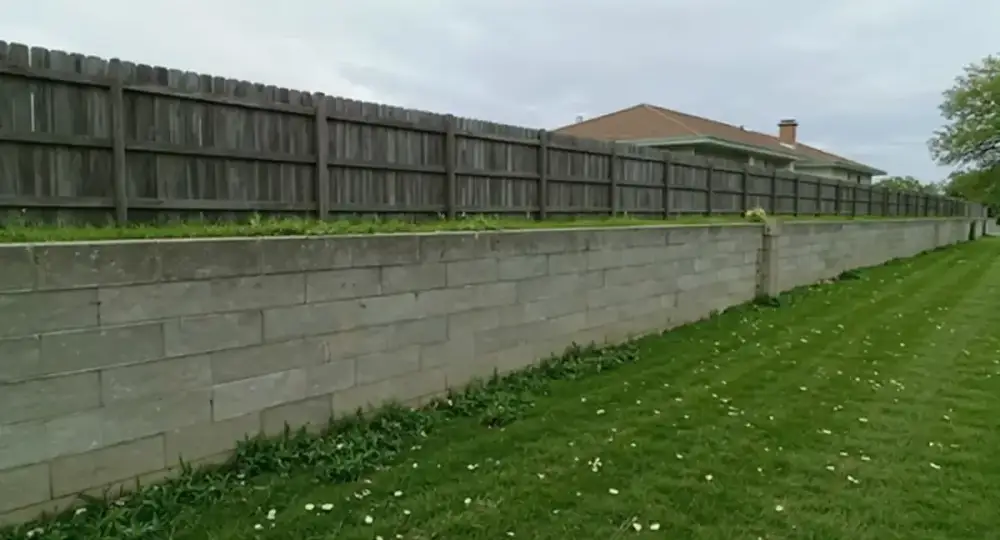
The mix specified for wet, freezing ground
Air entrainment is the spec that survives Ames winters.
We pour with 5 to 7 percent entrained air, the ACI range for freeze-thaw concrete, so the moisture that reaches the face can freeze and expand into those pockets instead of scaling the surface. On river-bottom ground where the concrete stays damp, that air is the difference between a clean face and a crumbling one.
The mix design is matched to the exposure.
A wall fighting groundwater and Story County winters gets a denser, properly air-entrained mix rather than a generic flatwork batch. The spec is chosen for what the wall will actually face.
Backfill that keeps water moving
Free-draining gravel goes against the wall, not the wet native soil.
Repacking saturated ground traps water at the concrete, so we place gravel that carries it to the drain tile instead. In Ames' high-water-table soils, that keeps hydrostatic pressure from ever building.
Weep holes and drain tile finish the system.
Water reaches the gravel, drops to the drain tile, and exits before it can press on the wall. The three parts work as one path.
Curing where the wall builds its strength
A wall earns its strength in the days after the pour.
Concrete reaches usable strength in about a week and keeps gaining for weeks, so we protect the fresh stem while it cures rather than backfilling against green concrete. Rushing that step is how a wall ends up weaker than its spec, especially in humid 5A air.
One crew runs the whole job.
Excavation, footing, stem, drainage, backfill in lifts, no handoffs. The free site walk reads how your Ames lot drains before we quote.
Gravel backfill going in against a freshly cured wall near the Squaw Creek bottoms, drain tile already set at the footing.
What Makes Ames Concrete Different?
Central Iowa concrete endures 100 to 120 freeze-thaw cycles in a single winter. Each cycle expands trapped moisture and opens micro-fractures, which is why air-entrained mixes and correct joint placement matter far more here than in milder climates.
How JLB Handles Retaining Walls in Ames
Free On-Site Inspection
We measure the area, check how it drains, and assess the base before quoting.
Tear-Out & Haul-Off
The old driveway comes out and we remove the debris so we start on solid ground.
Subgrade Prep
We compact and grade the base so the slab bears evenly over central-Iowa soil.
Forming & Reinforcement
Forms are set to grade and we add rebar or mesh where the load calls for it.
Air-Entrained Pour
We place a 5-7% air-entrained mix built for Iowa freeze-thaw.
Finish & Saw-Cut Joints
Broom or decorative finish, then control joints cut at planned intervals.
Cure & Protect
We protect the pour while it cures so it gains full strength without scaling.
Why Ames Homeowners Choose JLB for Retaining Walls
Footings set below Iowa's 42-inch frost line
Rebar-reinforced for structural strength
Full drainage systems — weep holes, gravel backfill, and drain tile — to manage persistent hydrostatic pressure from the till
JLB's own in-house crew
Concrete Retaining Walls in Ames — FAQ
Ames sits where the Skunk River meets Squaw Creek, so the water table stays high and soil stays heavy behind a wall. Without weep holes, gravel backfill, and drain tile, that water becomes pressure that tips the wall.
Yes. Wet ground weighs more and presses sideways with more force than dry soil. JLB pours walls as one rebar-reinforced piece so that heavier load travels down into the footing instead of cracking the wall.
A properly air-entrained mix at 5 to 7 percent, the ACI range for freeze-thaw. On river-bottom ground where the face stays damp, that air lets freezing water expand into the mix instead of scaling the surface.
Free-draining gravel, not the wet native soil. Repacked saturated ground traps water at the concrete, while gravel carries it to the drain tile and keeps hydrostatic pressure from building.
Concrete keeps gaining strength for weeks after the pour. JLB protects the fresh stem and avoids backfilling against green concrete, because rushing the cure leaves the wall weaker than its spec, especially in humid 5A air.
Get Your Free Retaining Walls Estimate in Ames
Fill out the form and the JLB team will reach out within 24 hours. Or call us now at (515) 717-8560.
Retaining Walls Near You
Our Central Iowa Offices
Local crews serving the Des Moines metro. We come to you.
JLB Basement Waterproofing & Foundation Repair — Des Moines
97 Indiana Ave Suite #1Des Moines, IA, 50314(515) 717-8560 View on Google Maps
Ready to Pour? Get a Free Estimate.
A free on-site estimate tells you exactly what your retaining walls project takes — and what it costs. Call (515) 717-8560.