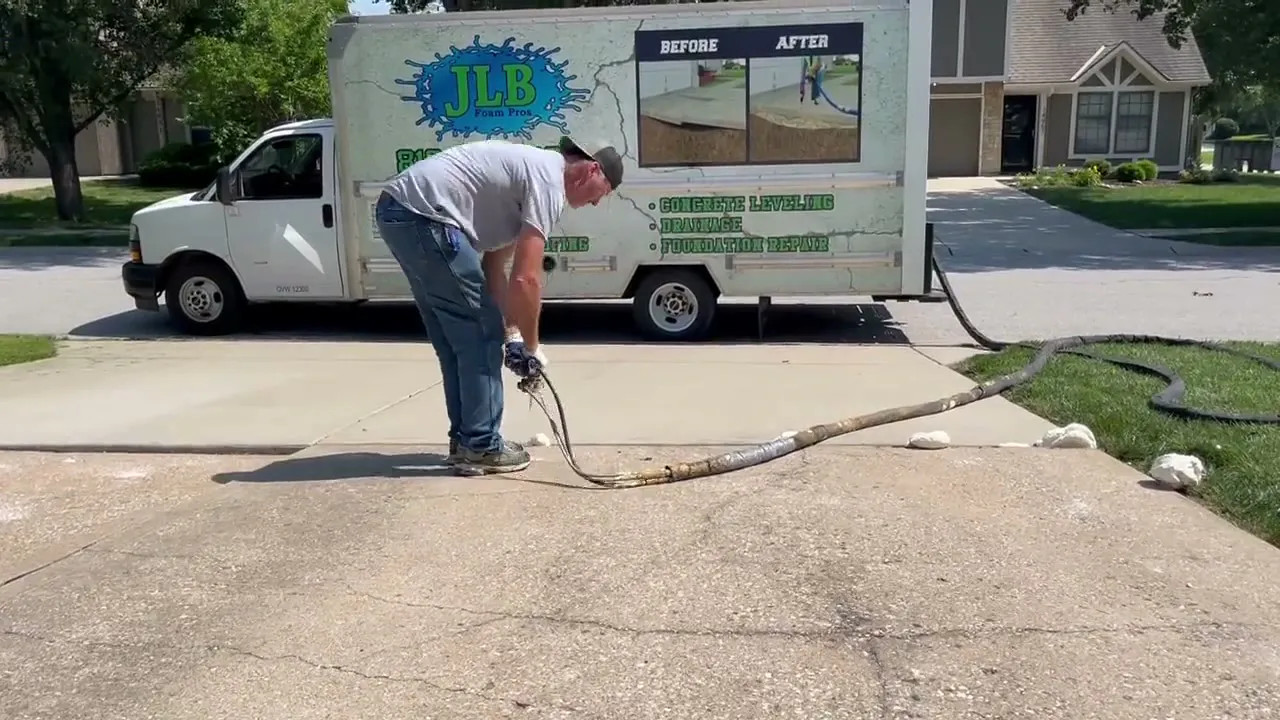
Slab Leveling & Concrete Raising in Grandview, MO
Grandview's terrain drops from high ground into the Blue River valley, and that transition zone is where driveways and sidewalks settle most. Polyjacking lifts them back without the cost of tearing out.
Free 45-Minute Analysis + Written Report
Get a precise analysis of your foundation and waterproofing situation, and a clear estimate on what any fixes or corrections might cost.
Takes 30 seconds. We'll call within 24 hours.
Thank You!
We'll be in touch within 24 hours.
How the Blue River Valley Transition Creates Settling Problems in Grandview
Grandview straddles a geological transition that most homeowners never think about until their concrete starts moving. The western and central parts of the city sit on high ground — the same clay-heavy upland that extends across southern Jackson County. But as the terrain drops eastward toward the Blue River valley, the soil profile changes. Clay layers give way to alluvial deposits. Compacted upland soil transitions to looser valley fill. Concrete slabs poured across this transition settle unevenly because the soil beneath one end behaves differently from the soil beneath the other.
From Ridge to River: Grandview's Soil Story
Homes along Blue Ridge Boulevard and near View High Drive Overlook sit on the high ground where dense, expansive clay dominates. This soil cycles through the familiar wet-dry pattern — swelling during spring rains, shrinking during summer drought — that creates voids beneath concrete across Jackson County. The 1950s through 1970s housing stock in these neighborhoods has been through 50 to 70 years of this cycling, and the driveways and sidewalks show it.
Properties east of I-49 and closer to the Blue River sit on transitional soil where the upland clay meets river-deposited material. This transitional zone is less predictable. Sandy pockets sit beside clay lenses. Gravel layers interrupt otherwise uniform clay. Concrete poured across these varying soil types settles at different rates depending on what's beneath each section of the slab. A single driveway can have one panel stable on gravel and an adjacent panel dropped three inches on a clay pocket that shrank during the last dry summer.
Where Driveways Drop the Most
In Grandview, the most common settling points follow drainage patterns and construction transitions. Garage aprons settle where the building pad meets backfill — the same pattern seen across the metro. But Grandview adds a terrain factor: homes on sloped lots that face the Blue River valley have driveways where the downhill end settles faster than the uphill end because water erodes the bearing surface at the lower edge. Along Main Street and in the neighborhoods near Longview Community College, this directional settling is visible block after block.
The Harry S. Truman Farm Home area and surrounding residential streets show the mid-century settling pattern at its most developed. Original 1950s and 1960s driveways have been through enough clay cycles that settled sections are commonly two to four inches below their original grade. These slabs are typically still solid — thick, dense, mid-century pours that hold together as units — but they no longer sit where they were placed.
Foam Injection at the Valley's Edge
Polyjacking works particularly well in Grandview's transitional soils because the foam adapts to whatever void shape it encounters. Unlike mudjacking slurry, which flows through loose sandy pockets and may not stay where it's needed, polyurethane foam expands to fill the cavity's exact contours and then cures in place within minutes. For a detailed look at the injection process, visit our polyjacking service page.
For Grandview homeowners, polyjacking's cost advantage is especially relevant in a market where home values are moderate. Replacing a settled driveway costs $4,000 to $8,000 — a significant investment on a home valued at $150,000 to $200,000. Polyjacking the same driveway runs $1,000 to $2,200 and is done the same day. The concrete is usable immediately, and the foam's lightweight, moisture-resistant properties mean it holds grade even through Grandview's soil transitions and seasonal clay movement.
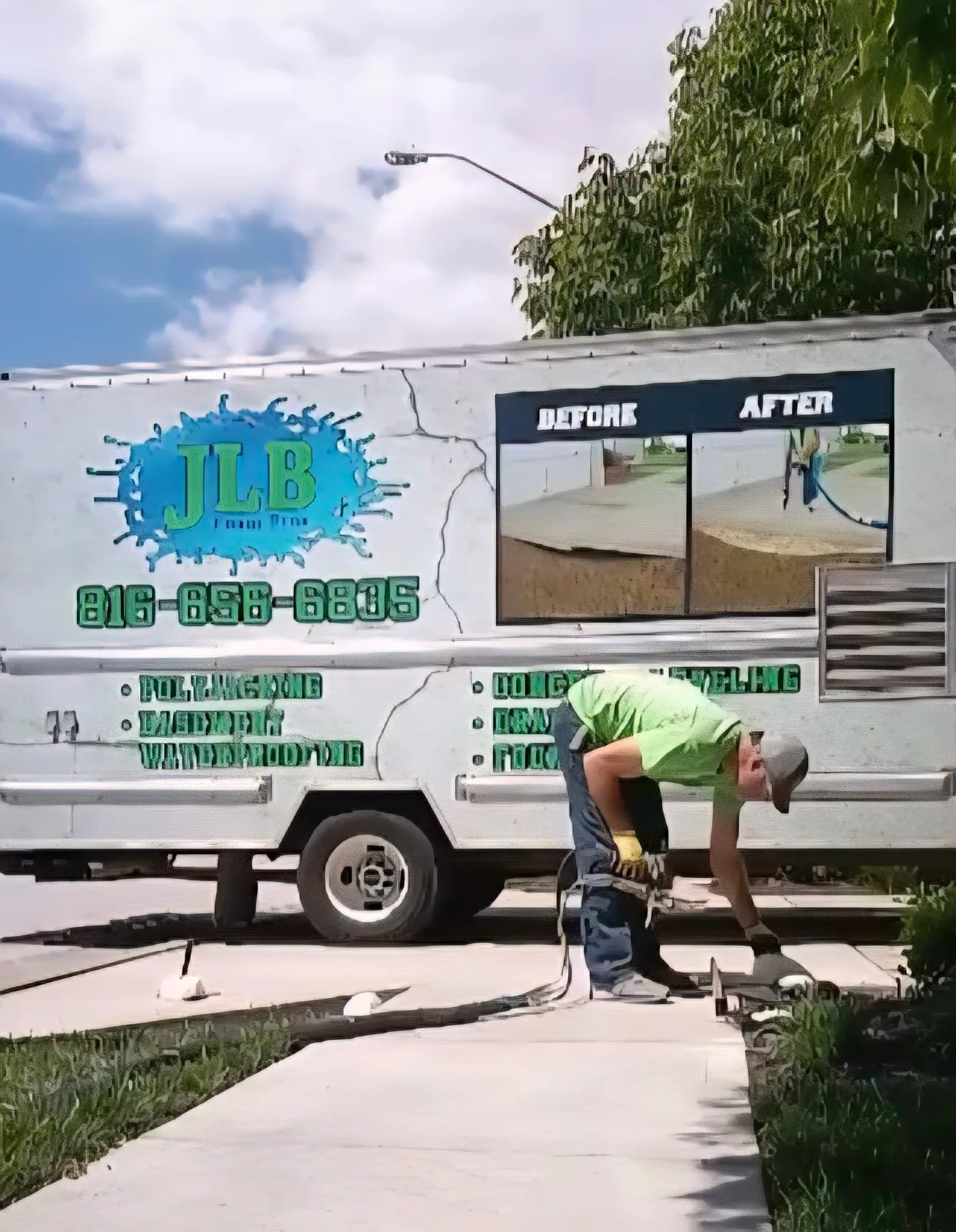
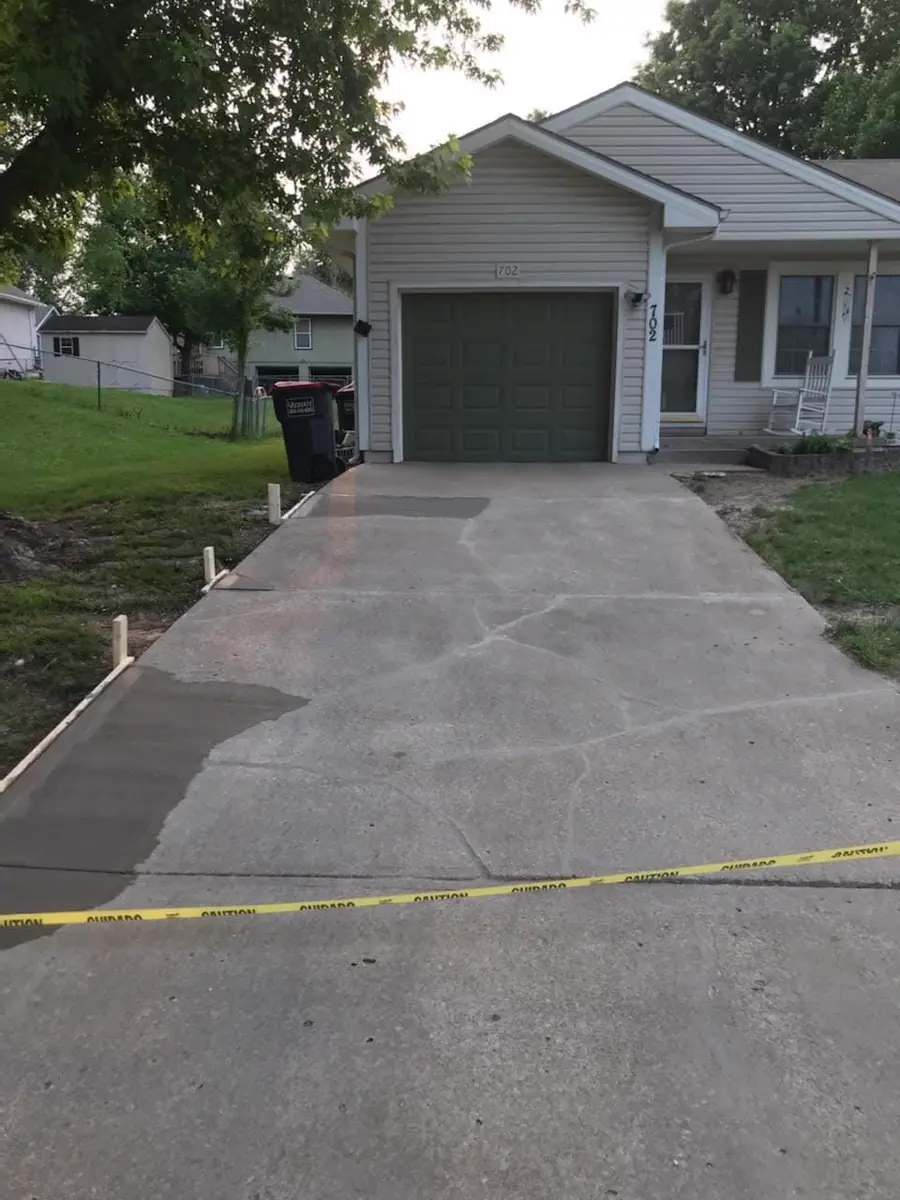
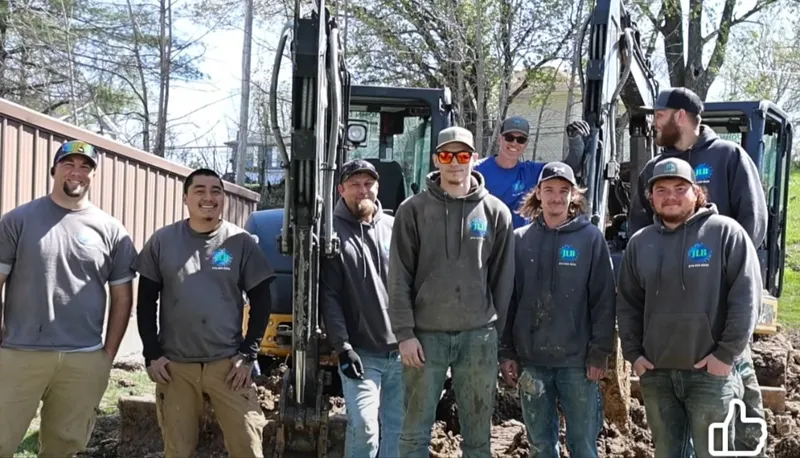
Meet the Team Serving Grandview
JLB is a local crew — not a franchise. We handle polyjacking & concrete leveling across Grandview and the Kansas City metro. Watch to see who shows up at your door.
Two Ways to Pay Over Time
12 Months Same As Cash
Pay the full balance within 12 months and you pay no interest.
5 Years at 6.99% APR
A lower monthly payment, spread over 60 months.
On approved credit. Ask for full terms at your free estimate.
No need to put the project off another season.
What Signs of Concrete Settlement Should Grandview Homeowners Watch For?
These are the signs your concrete has settled and could use leveling.
Driveway Sunken Near the Garage
That lip where the driveway meets the garage? You feel it every time you pull in. It catches wheels, scrapes bumpers, and looks worse every season.
Sidewalk Sections Tilted or Uneven
Guests trip on it. You step over it out of habit. It looks bad and you know it — and so does everyone who walks up to your front door.
Patio Sloping the Wrong Way
Your patio furniture wobbles. Drinks slide. Rain puddles where you sit instead of draining away. It's annoying every single time you use it.
Pool Deck or Porch Sinking
A settling porch or pool deck looks neglected. The gaps between slabs catch toes and collect dirt. It makes the whole backyard look rough.
Water Puddles That Won't Drain
Standing water on your driveway or patio after every rain. It sits there for days, grows algae, and makes your concrete look stained and sloppy.
Visible Gaps Under Slab Edges
You can see daylight under the edges. The concrete is floating over a void, it looks uneven, and it's only going to settle more.
Settled concrete in Grandview?
We'll measure the drop and give you a fixed price. Most Grandview driveways are back to level the same afternoon.
Four Steps to Level Concrete
Most polyjacking jobs are done in a few hours. Here's the process from start to "walk on it today."
Free Assessment
We measure the settlement, identify void locations, and give you an exact quote. No pressure, no upsells — just an honest assessment of what needs leveling.
Small Holes, Big Results
We drill penny-sized holes through the slab at strategic points. These are the injection ports — and they're nearly invisible when we're done.
Foam Injection & Lift
High-density polyurethane foam is injected through the ports. It expands beneath the slab, fills the void, and lifts the concrete back to level with millimeter precision.
Patch, Cure, Walk
Holes are patched, foam cures in 15 minutes, and you can walk and drive on the slab the same day. Done.
Who Handles Polyjacking & Concrete Leveling in Grandview?
Grandview is a close-knit community of about 26000, and we treat it that way. Our Kansas City area crew handles every job in Grandview personally — the same team that inspects your home is the same team that does the work. No subcontractors, no handoffs.
Call (816) 408-3651“Our driveway had this ugly dip right where you pull into the garage. It drove me crazy for two years. JLB came out, lifted the whole thing in about 3 hours, and you honestly can't tell it was ever sunk. Should've called way sooner.”
Why Do Grandview Homeowners Choose JLB for Polyjacking & Concrete Leveling?
We earn trust the old-fashioned way: honest assessments, fair pricing, and results that last.
Jackson County Permit Expertise
We pull permits and coordinate inspections with Jackson County building officials for every concrete leveling job. Our crews have worked with the local building department for years — we know their process inside and out.
Concrete Leveling Specialists
Grandview's driveways, sidewalks, patios, and garage floors settle when the ground beneath them washes out or compacts. Our crews lift and level flatwork with polyurethane foam that fills the void and raises the slab back to grade — usually the same day. We know when polyjacking beats old-style mudjacking and when a slab is too far gone to save.
Small-Town Accountability
In Grandview, reputation is everything. We show up when we say we will, we do the work right, and we stand behind it with a transferable warranty. Every job gets our full attention.
Affordable Solutions
Grandview's terrain means some homes face bigger concrete-settling challenges than others. We offer financing to make sure the cost doesn't prevent you from protecting your home when the soil is working against it.
What Does Polyjacking & Concrete Leveling Cost in Grandview, MO?
Sunken concrete in Grandview is almost always caused by Jackson County's clay soil shrinking during dry spells and creating voids beneath the slab. Polyjacking fills those voids and lifts the concrete back to grade — for 50-70% less than replacement. Here's the pricing breakdown.
| Project Type | Typical Cost Range | Notes |
|---|---|---|
| Sidewalk section (1–2 slabs) | $300–$800 | Most affordable concrete leveling project |
| Driveway leveling | $800–$2,500 | Depends on number of injection points |
| Patio leveling | $500–$1,500 | Depends on size and number of voids |
| Garage floor leveling | $600–$2,000 | Often combined with driveway work |
| Pool deck leveling | $1,000–$3,000 | Requires precision for drainage slope |
| Per-hole injection point | $150–$350 | Most projects need 4–12 injection points |
These ranges reflect typical Kansas City metro pricing as of 2026. Actual costs vary based on the area being lifted, number of injection points, and accessibility. JLB provides free assessments — call (816) 408-3651 for an accurate quote.
Two Ways to Pay for It
12 Months Same As Cash
Pay the full balance within 12 months and you pay no interest.
Best if you can pay it off within a year.
5 Years at 6.99% APR
A lower monthly payment, spread over 60 months.
Best for bigger projects.
On approved credit. Ask for full terms at your free estimate.
No need to put the project off another season.
Concrete Leveling Questions for Grandview Homeowners
Grandview spans a geological transition from upland clay in the west to Blue River valley alluvial deposits in the east. The upland clay swells and shrinks with moisture, creating voids as it pulls away from slabs. The valley-edge soil is a mix of clay, sand, and gravel that compacts unevenly. Concrete on the high ground settles uniformly as the clay shifts. Concrete near the valley edge settles erratically because each section sits on a different soil composition.
Yes. Polyurethane foam fills voids in any soil type — dense clay, loose sand, or mixed transitional material. The foam expands to match the shape of the cavity and cures in place, so it doesn't flow through sandy pockets the way liquid-based mudjacking slurry can. In Grandview's transitional soils, this property makes polyjacking more reliable than traditional methods.
Most 1950s through 1970s concrete in Grandview is solid despite its age. Mid-century slabs were typically 4 to 6 inches thick with durable mixes. The concrete has settled because the soil beneath it shifted — not because the slab itself failed. If the concrete is intact as a unit, polyjacking lifts it back to grade. If sections have broken into loose pieces, those sections need spot replacement, but this is uncommon in Grandview's vintage concrete.
Homes on sloped lots in Grandview have driveways where the street end is the downhill end. Water flowing beneath the slab erodes the bearing surface at the lower edge faster than the upper edge, creating a progressive tilt over the years. Each storm cycle removes a small amount of fine soil particles from the downhill side. After decades of this erosion, the driveway slopes toward the street more steeply than when it was poured.
Typical Grandview polyjacking costs range from $1,000 to $2,200 for a driveway, $400 to $800 per sidewalk panel, and $700 to $1,500 for a garage floor. Full replacement of a driveway costs $4,000 to $8,000 in comparison. The cost difference is even more significant in Grandview's moderate housing market, where a $6,000 concrete replacement represents a disproportionate share of the home's value.
Free Concrete Leveling Assessment in Grandview
Fill out the form and we'll contact you within 24 hours to schedule your free concrete assessment. Or call us now at (816) 408-3651.
Where Else Does JLB Provide Polyjacking & Concrete Leveling?
Our Locations
We're always close enough to help — our crews are local to your area.
JLB Foundation Repair & Basement Waterproofing — Kansas City
111 NE 72nd St, Ste 111Kansas City, MO, 64119(816) 408-3651 View on Google Maps
Level Your Concrete. Get a Free Assessment.
A free assessment takes about 30 minutes. We'll measure the settlement, explain your options, and give you an honest quote — most jobs are done the same day.