Concrete Leveling & Polyjacking Services in Lawrence, KS
Lawrence sits between two river valleys where high water tables and shifting soil wash support from beneath concrete slabs. Polyjacking lifts settled driveways and walkways back to level — no tear-out required.
Free 45-Minute Analysis + Written Report
Get a precise analysis of your foundation and waterproofing situation, and a clear estimate on what any fixes or corrections might cost.
Takes 30 seconds. We'll call within 24 hours.
Thank You!
We'll be in touch within 24 hours.
Concrete Settling in Lawrence: River Valley Soil and Walkways That Shift
Lawrence's location between the Kansas and Wakarusa Rivers puts much of the city's concrete flatwork on soil that stays wetter than most of the metro. The water table in lower-lying areas — particularly near the Kansas River valley north of 6th Street and the Wakarusa floodplain south of Clinton Parkway — sits close enough to the surface that soil beneath driveways and sidewalks rarely dries out completely. This persistent moisture keeps the clay swollen during wet months and accelerates compaction when summer heat finally pulls the water down. Concrete slabs riding on this cycle settle unevenly as the soil beneath them goes through annual volume changes that flatten terrain cities don't experience at this intensity.
River Valley Soil and What It Does to Concrete
The alluvial deposits left by the Kansas River create a soil profile that's layered rather than uniform. Dense clay sits over sandy pockets, which sit over more clay. When water migrates through these layers, it washes fine particles from between the sand and clay zones, creating internal voids that eventually cause the surface above to drop. Homeowners in North Lawrence and along the river corridor — near the levee system and the industrial areas — deal with this type of settling more than any other part of the city. Driveways and sidewalks in these neighborhoods often show linear depressions where the slab follows a buried channel of loose, washed-out material.
West Lawrence, where most of the post-1990s development sits, faces a slightly different version of the problem. The terrain between Clinton Lake and the K-10 highway was graded from rolling prairie, and the fill used to level building sites is now 15 to 25 years into its compaction timeline. Subdivisions like Free State, Alvamar, and the developments along Wakarusa Drive sit on material that continues to settle, and the driveways and walkways poured on this fill reflect that ongoing movement.
Walkways and Driveways Near the Floodplain
Lawrence's university campus and Massachusetts Street corridor feature some of the oldest concrete in Douglas County. Sidewalks in the neighborhoods between KU's campus and downtown — along Tennessee, Kentucky, and Louisiana Streets — were poured in the early to mid-1900s. These slabs sit on soil that has been through more than a century of the Kansas River valley's moisture cycles. The resulting settlement creates the uneven surfaces familiar to anyone who has walked these streets: lifted joints, dropped sections, and cracked panels where tree roots have further disturbed the bearing surface.
Polyjacking addresses Lawrence's settling problems by filling the voids beneath slabs with closed-cell polyurethane foam. The foam is injected through dime-sized holes, expands to fill the cavity, and lifts the concrete back to its original grade. For a detailed explanation of the injection process and materials, see our polyjacking service page. In Lawrence's high-water-table areas, the foam's moisture resistance is critical — it won't break down or wash away the way soil-based fill materials can when groundwater levels rise during spring runoff season.
Lifting Slabs Without Disrupting Historic Sidewalks
In older Lawrence neighborhoods, the concrete itself is often in good condition — it's just no longer sitting where it was poured. Replacing these slabs means demolition, equipment access through narrow lots, and pouring new concrete that may look noticeably different from the surrounding sections. Polyjacking preserves the existing slab and its original appearance while restoring it to grade. The small injection holes are patched and barely visible. For Lawrence homeowners who value the character of their older neighborhood, that preservation matters.
Meet the Team Serving Lawrence
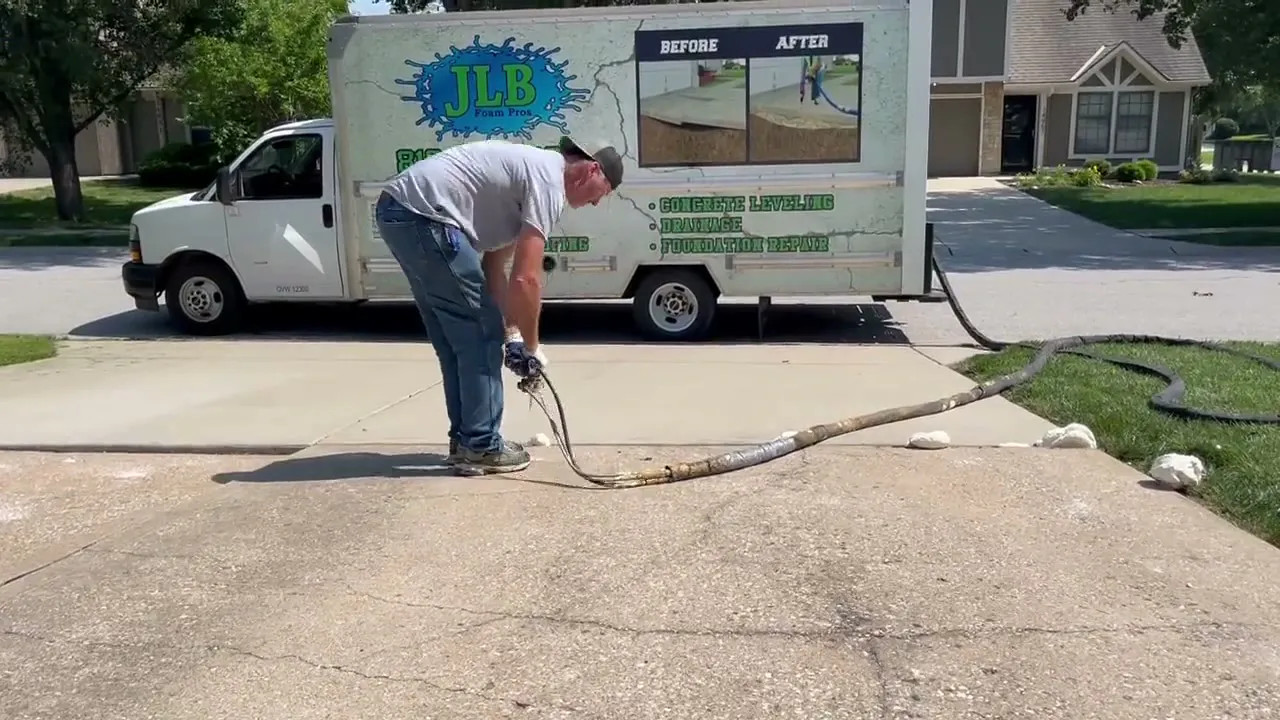
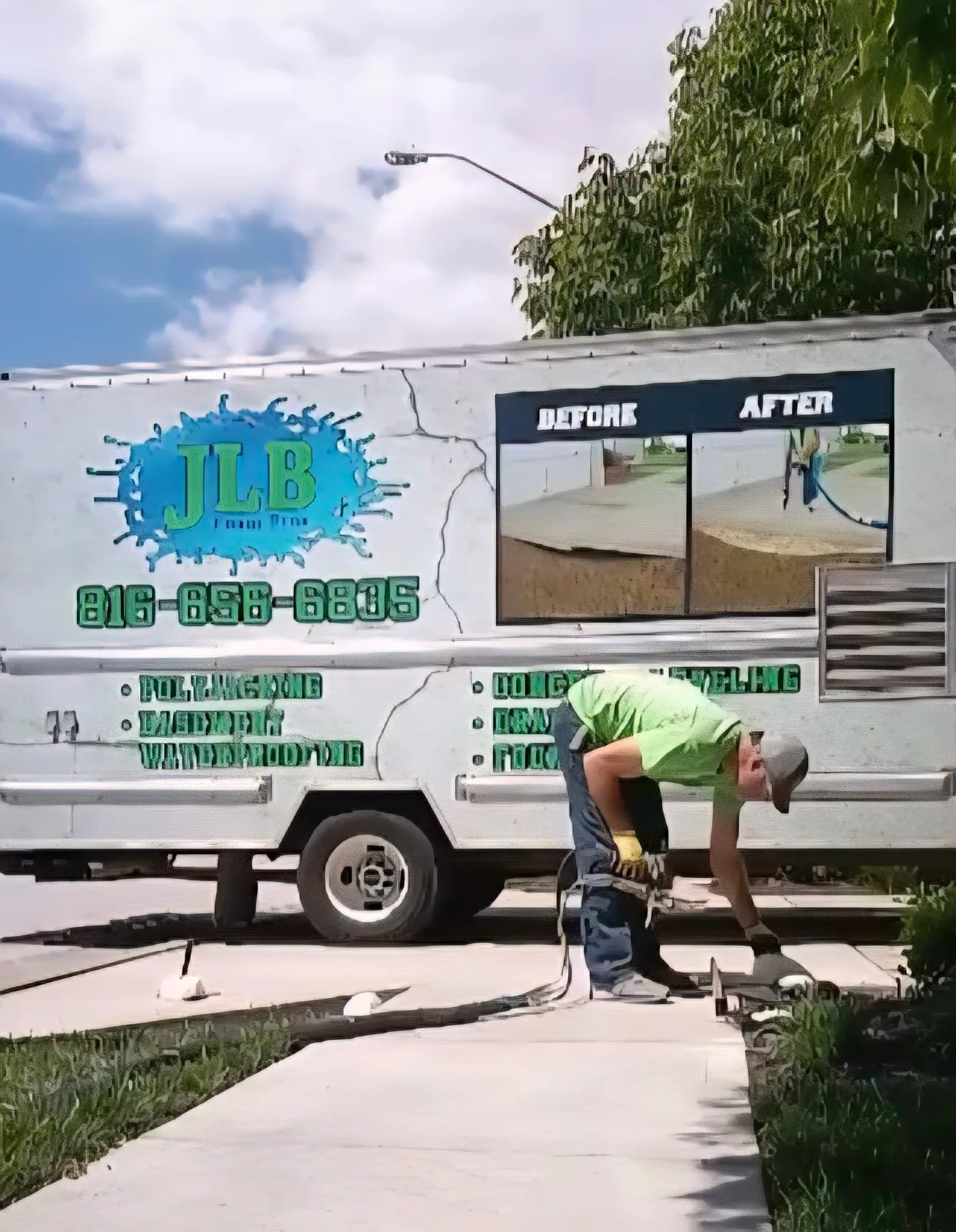
JLB is a local crew — not a franchise. We handle polyjacking & concrete leveling across Lawrence and the Kansas City metro. Watch to see who shows up at your door.
Two Ways to Pay Over Time
12 Months Same As Cash
Pay the full balance within 12 months and you pay no interest.
5 Years at 6.99% APR
A lower monthly payment, spread over 60 months.
On approved credit. Ask for full terms at your free estimate.
No need to put the project off another season.
What Signs of Concrete Settlement Should Lawrence Homeowners Watch For?
These are the signs your concrete has settled and could use leveling.
Driveway Sunken Near the Garage
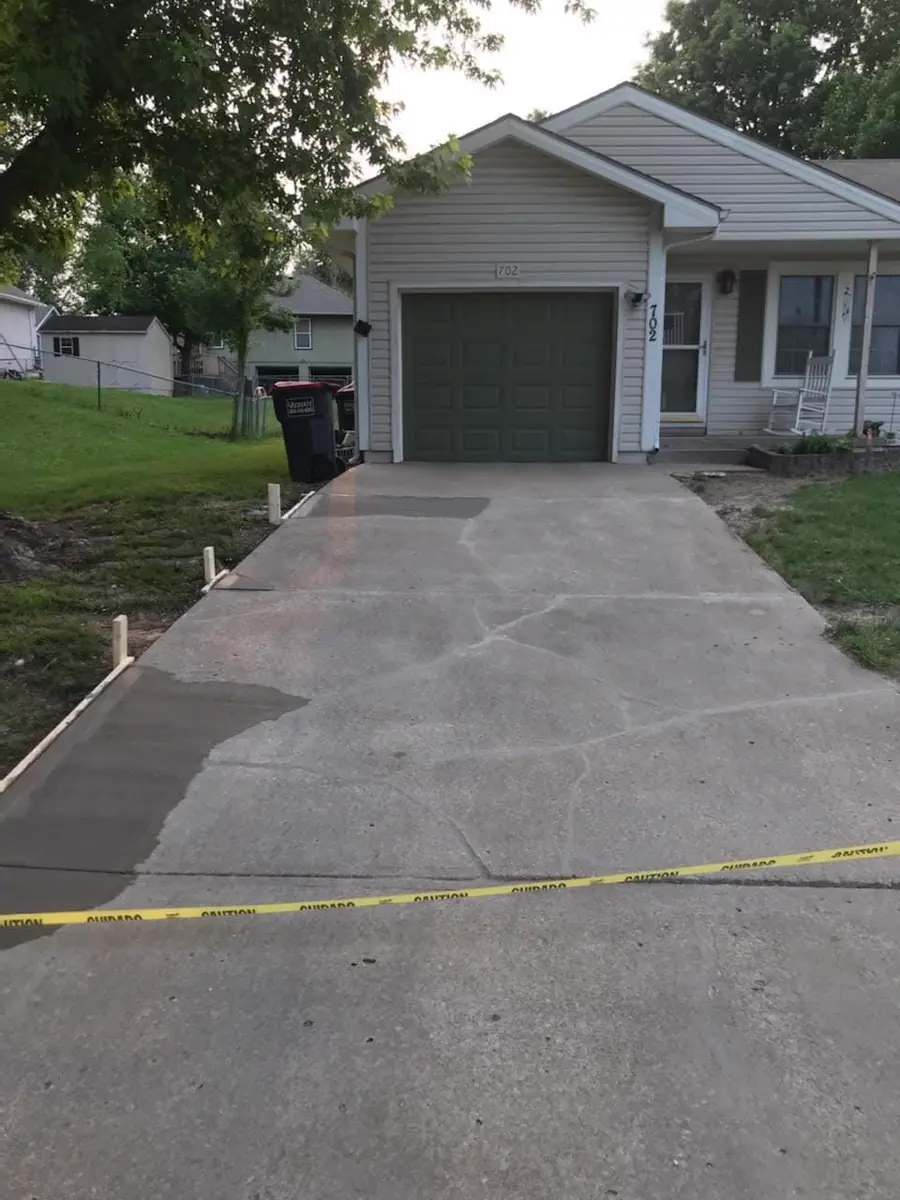
That lip where the driveway meets the garage? You feel it every time you pull in. It catches wheels, scrapes bumpers, and looks worse every season.
Sidewalk Sections Tilted or Uneven
Guests trip on it. You step over it out of habit. It looks bad and you know it — and so does everyone who walks up to your front door.
Patio Sloping the Wrong Way
Your patio furniture wobbles. Drinks slide. Rain puddles where you sit instead of draining away. It's annoying every single time you use it.
Pool Deck or Porch Sinking
A settling porch or pool deck looks neglected. The gaps between slabs catch toes and collect dirt. It makes the whole backyard look rough.
Water Puddles That Won't Drain
Standing water on your driveway or patio after every rain. It sits there for days, grows algae, and makes your concrete look stained and sloppy.
Visible Gaps Under Slab Edges
You can see daylight under the edges. The concrete is floating over a void, it looks uneven, and it's only going to settle more.
Settled sidewalks or driveways in Lawrence?
We'll assess the settlement, explain the fix, and give you a fixed quote. Most Lawrence polyjacking jobs wrap up in one visit.
Four Steps to Level Concrete
Most polyjacking jobs are done in a few hours. Here's the process from start to "walk on it today."
Free Assessment
We measure the settlement, identify void locations, and give you an exact quote. No pressure, no upsells — just an honest assessment of what needs leveling.
Small Holes, Big Results
We drill penny-sized holes through the slab at strategic points. These are the injection ports — and they're nearly invisible when we're done.
Foam Injection & Lift
High-density polyurethane foam is injected through the ports. It expands beneath the slab, fills the void, and lifts the concrete back to level with millimeter precision.
Patch, Cure, Walk
Holes are patched, foam cures in 15 minutes, and you can walk and drive on the slab the same day. Done.
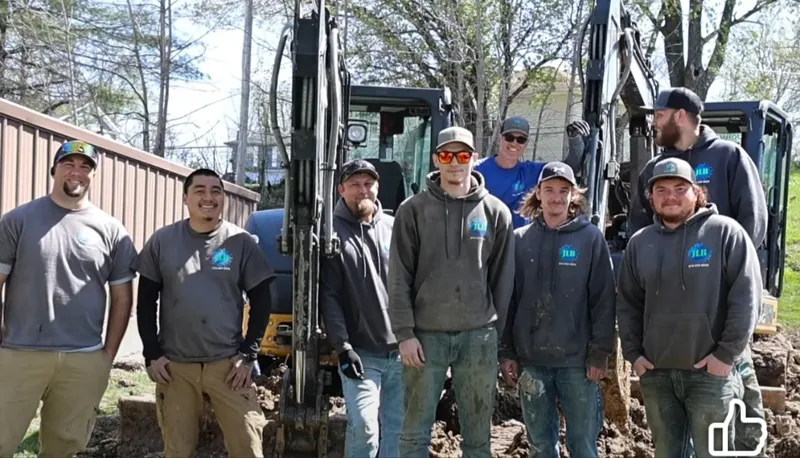
Who Handles Polyjacking & Concrete Leveling in Lawrence?
Lawrence is a community we know well. Our crews work throughout Douglas County, and with around 95000 residents, we've seen the full range of foundation conditions here — from older homes in established neighborhoods to newer builds on the edges of town. Same team from inspection to completion, every time.
Call (816) 408-3651“Our driveway had this ugly dip right where you pull into the garage. It drove me crazy for two years. JLB came out, lifted the whole thing in about 3 hours, and you honestly can't tell it was ever sunk. Should've called way sooner.”
Why Do Lawrence Homeowners Choose JLB for Polyjacking & Concrete Leveling?
We earn trust the old-fashioned way: honest assessments, fair pricing, and results that last.
Licensed in Kansas & Missouri
JLB is fully licensed to perform concrete leveling in both Kansas and Missouri. For Lawrence homeowners in Douglas County, that means we handle the Douglas County permit applications, coordinate inspections, and ensure code compliance from start to finish.
Concrete Leveling Specialists
Lawrence's driveways, sidewalks, patios, and garage floors settle when the ground beneath them washes out or compacts. Our crews lift and level flatwork with polyurethane foam that fills the void and raises the slab back to grade — usually the same day. We know when polyjacking beats old-style mudjacking and when a slab is too far gone to save.
Trusted Across Lawrence
We've leveled concrete throughout Lawrence's established and growing neighborhoods. With around 95000 residents, word travels fast — and our reputation is built on honest work and fair pricing.
Financing for Older Homes
Older homes often need larger repairs that can strain a household budget. We offer flexible financing plans specifically so Lawrence homeowners with sunken concrete can get the work done now — before another season of freeze-thaw movement makes it worse.
What Does Polyjacking & Concrete Leveling Cost in Lawrence, KS?
Sunken concrete in Lawrence is almost always caused by Douglas County's clay soil shrinking during dry spells and creating voids beneath the slab. Polyjacking fills those voids and lifts the concrete back to grade — for 50-70% less than replacement. Here's the pricing breakdown.
| Project Type | Typical Cost Range | Notes |
|---|---|---|
| Sidewalk section (1–2 slabs) | $300–$800 | Most affordable concrete leveling project |
| Driveway leveling | $800–$2,500 | Depends on number of injection points |
| Patio leveling | $500–$1,500 | Depends on size and number of voids |
| Garage floor leveling | $600–$2,000 | Often combined with driveway work |
| Pool deck leveling | $1,000–$3,000 | Requires precision for drainage slope |
| Per-hole injection point | $150–$350 | Most projects need 4–12 injection points |
These ranges reflect typical Kansas City metro pricing as of 2026. Actual costs vary based on the area being lifted, number of injection points, and accessibility. JLB provides free assessments — call (816) 408-3651 for an accurate quote.
Two Ways to Pay for It
12 Months Same As Cash
Pay the full balance within 12 months and you pay no interest.
Best if you can pay it off within a year.
5 Years at 6.99% APR
A lower monthly payment, spread over 60 months.
Best for bigger projects.
On approved credit. Ask for full terms at your free estimate.
No need to put the project off another season.
Concrete Leveling Questions for Lawrence Homeowners
Yes. In lower-lying parts of Lawrence — especially near the Kansas River valley and the Wakarusa floodplain — the water table sits close enough to the surface that soil beneath slabs stays saturated for extended periods during spring. When summer heat finally dries the clay, it shrinks aggressively, creating voids beneath concrete that the persistent moisture had kept swollen. This extreme wet-to-dry swing produces more dramatic settlement than areas with deeper water tables and more moderate moisture cycles.
The historic neighborhoods between KU's campus and downtown Lawrence have some of the oldest concrete in Douglas County. Polyjacking works well here because it lifts the existing slab without replacing it — preserving the original pour and matching the surrounding sections. The only requirement is that the concrete itself is solid, meaning no severe spalling or crumbling. Most of Lawrence's older sidewalks are thick enough and solid enough to be good candidates for foam injection leveling.
Most West Lawrence developments built from the 1990s onward sit on graded prairie that required significant fill to create level building sites. That fill material — typically native Douglas County clay — compacts under its own weight and under the load of concrete slabs over 10 to 25 years. The result is settling that appears 'early' compared to homes built on undisturbed soil. Subdivisions near Clinton Lake and along Wakarusa Drive are especially affected because the terrain there required more extensive grading.
The polyurethane foam used in polyjacking is closed-cell, meaning it doesn't absorb water. In Lawrence's floodplain-adjacent areas where groundwater levels fluctuate seasonally, this is important. Traditional mudjacking uses a water-based cement slurry that can erode or soften when saturated. Foam maintains its volume and strength regardless of surrounding moisture levels. It's also lightweight — 2 to 4 pounds per cubic foot — so it doesn't add load to soil that's already prone to washing out.
The most common settling points on Lawrence properties are the driveway apron where it meets the garage, walkways connecting the driveway to the front porch, and patio slabs in the backyard. Each of these sits on soil that was disturbed during construction — utility trenches, grading, or backfill — and that disturbed soil compacts at a different rate than the undisturbed clay beside it. In Lawrence specifically, driveways with mature trees along one edge often settle on the tree side, where root systems have drawn moisture from the clay and caused localized shrinkage.
Free Concrete Leveling Assessment in Lawrence
Fill out the form and we'll contact you within 24 hours to schedule your free concrete assessment. Or call us now at (816) 408-3651.
Where Else Does JLB Provide Polyjacking & Concrete Leveling?
Our Locations
We're always close enough to help — our crews are local to your area.
JLB Foundation Repair & Basement Waterproofing — Leawood
10308 State Line Rd Suite 300Leawood, KS, 66206(913) 660-6308 View on Google Maps
JLB Foundation Repair & Basement Waterproofing — Kansas City
111 NE 72nd St, Ste 111Kansas City, MO, 64119(816) 408-3651 View on Google Maps
Level Your Concrete. Get a Free Assessment.
A free assessment takes about 30 minutes. We'll measure the settlement, explain your options, and give you an honest quote — most jobs are done the same day.