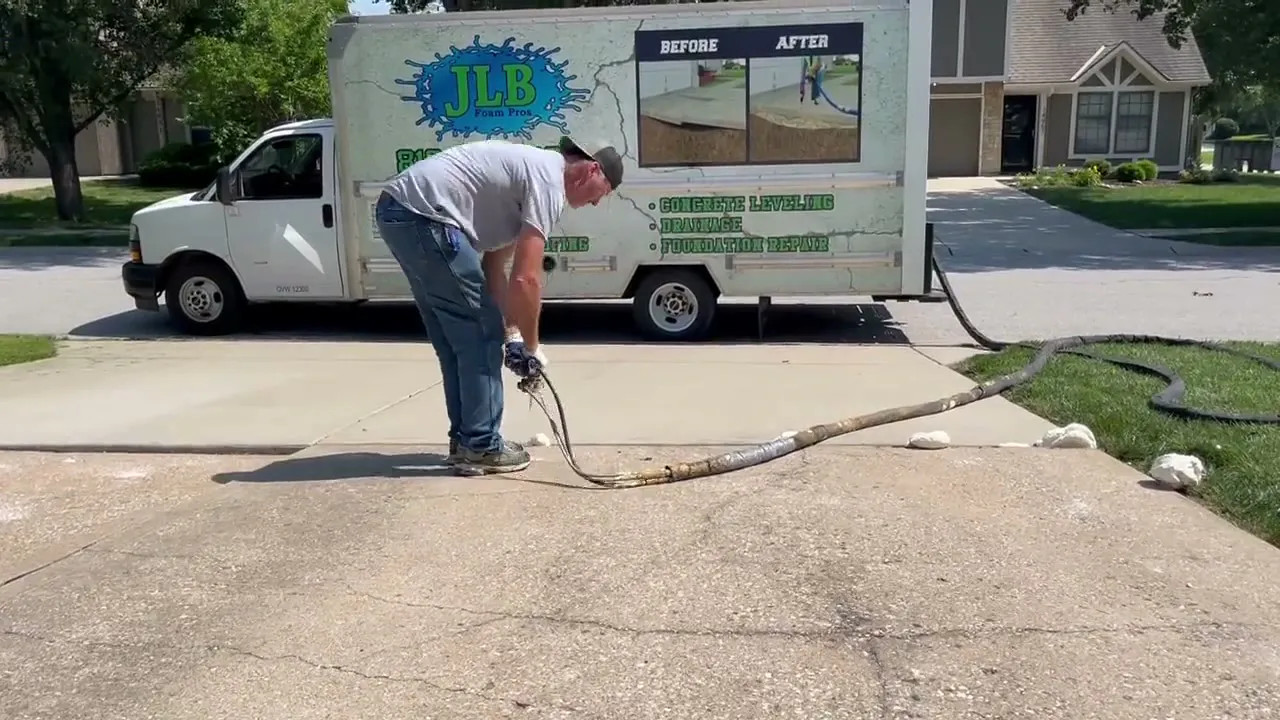
Polyjacking & Concrete Lifting in Gladstone, MO
Gladstone's extremely clay-heavy soil and established 1950s-80s housing stock create persistent concrete settling across the Northland. Polyjacking lifts slabs back to level without tearing up tight lots.
Free 45-Minute Analysis + Written Report
Get a precise analysis of your foundation and waterproofing situation, and a clear estimate on what any fixes or corrections might cost.
Takes 30 seconds. We'll call within 24 hours.
Thank You!
We'll be in touch within 24 hours.
Gladstone's Clay-Heavy Soil and What It Does to Concrete
Gladstone sits on some of the most clay-rich soil in the Kansas City metro, and that clay is the reason driveways, sidewalks, and patios across the city won't stay level. The soil beneath most Gladstone properties belongs to the same high-shrink-swell classification found across Clay County — dense, sticky, and responsive to every change in moisture. Spring rains swell it. Summer heat shrinks it. Winter freezing expands the water trapped in its pores. Each cycle shifts the soil slightly, and after 40 to 70 years of this under Gladstone's mid-century homes, the cumulative movement has created voids beneath concrete flatwork throughout the city.
Extreme Clay Content in the Northland
Gladstone is landlocked by Kansas City on all sides, which means the city's housing stock hasn't been diluted by new construction the way growing suburbs have. Most homes here were built between the 1950s and 1980s, and the concrete poured with them is original. These slabs have been riding the clay's moisture cycles for their entire lifespan. Unlike newer suburbs where some homes sit on engineered fill or compacted building pads, Gladstone's flatwork rests directly on native clay that was never modified for construction — the builder poured concrete on whatever was there.
The neighborhoods near Oak Grove Park, along N Oak Trafficway, and around Linden Square show the effects clearly. Driveways with one panel two inches lower than the next, sidewalks where every third section has dropped below the joint line, and garage floors that slope toward the door — these are all symptoms of clay that has compacted unevenly beneath aging slabs. The older the concrete and the more clay-heavy the soil, the more pronounced the settling.
Driveways Sinking Between Established Trees
Gladstone's mature tree canopy is one of the city's defining features, but those trees contribute directly to concrete settling. Established oaks, maples, and elms along residential streets have root systems that extend well beyond the canopy edge. When a root system runs beneath or alongside a driveway, it draws moisture from the clay during summer, creating localized dry pockets where the soil shrinks and pulls away from the slab. The side of the driveway nearest the tree drops; the opposite side holds. Over decades, this creates the tilted driveways common throughout Gladstone's established blocks.
Removing the trees isn't practical, and even if the trees were removed, the soil damage is already done. The voids created by root-driven moisture removal persist after the roots die. Polyjacking fills these voids with polyurethane foam that's unaffected by the surrounding soil moisture — it won't shrink as the clay dries or absorb water when the clay swells. For details on the foam and injection process, see our polyjacking service page.
Same-Day Leveling in Gladstone's Tight Lots
Gladstone's mid-century lots are compact by modern standards, and that limited space is another reason polyjacking makes sense over replacement. Many homes have narrow driveways between the house and the property line, with fences, landscaping, and utility connections on both sides. Getting a concrete truck and a demolition crew into these spaces — and doing the work without damaging the neighbor's property — is difficult and expensive. Polyjacking equipment fits on a small trailer that fits through narrow drives and tight spaces. All work is done from the slab surface with no excavation.
Most Gladstone polyjacking jobs are completed in two to three hours, and the concrete is immediately usable. There's no multi-day cure period blocking the driveway or walkway. For Gladstone homeowners on budgets typical of the city's mid-century housing market, polyjacking at $1,000 to $2,500 for a driveway is a practical alternative to the $4,000 to $8,000 full replacement that most can defer for years with a simple leveling treatment.
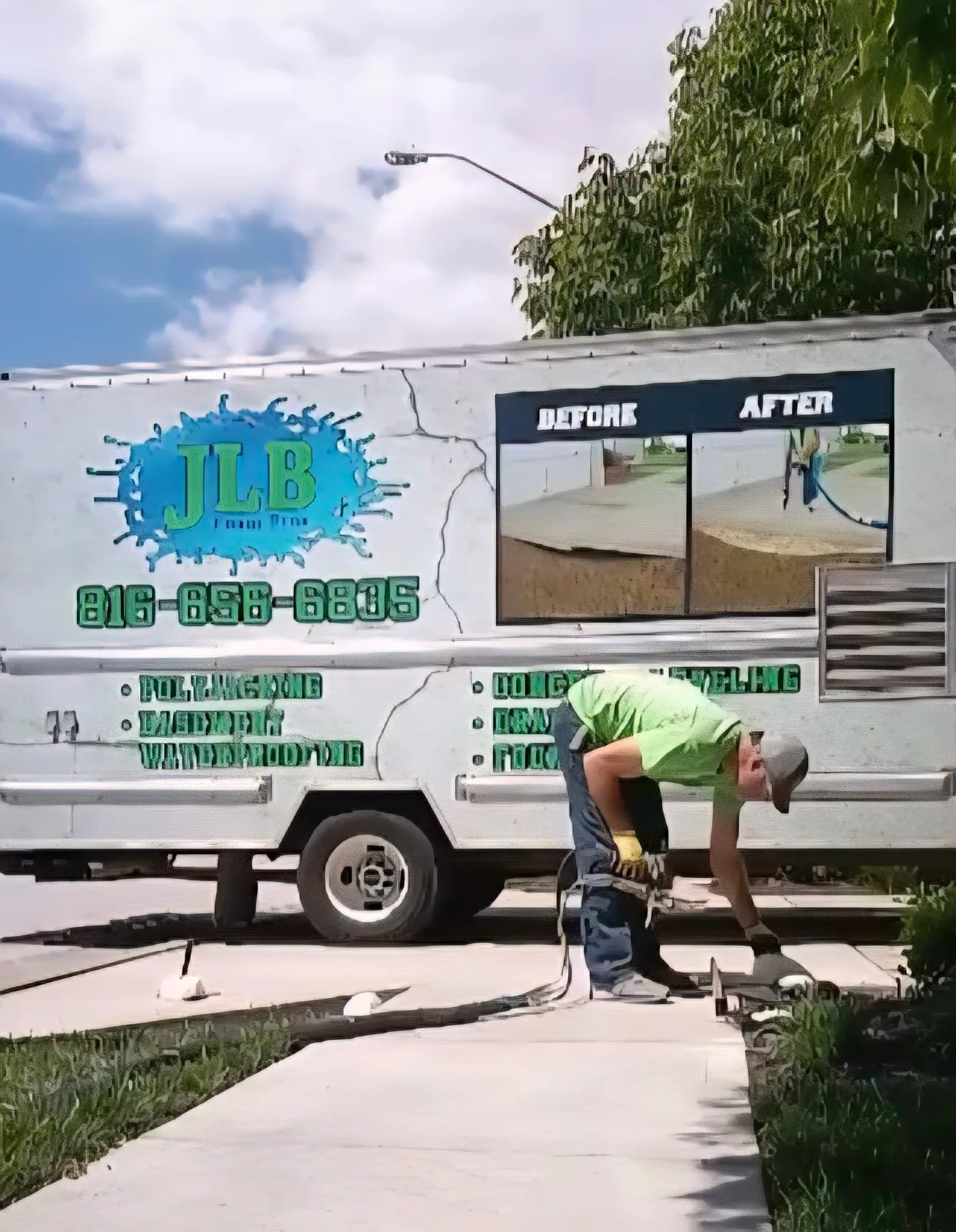
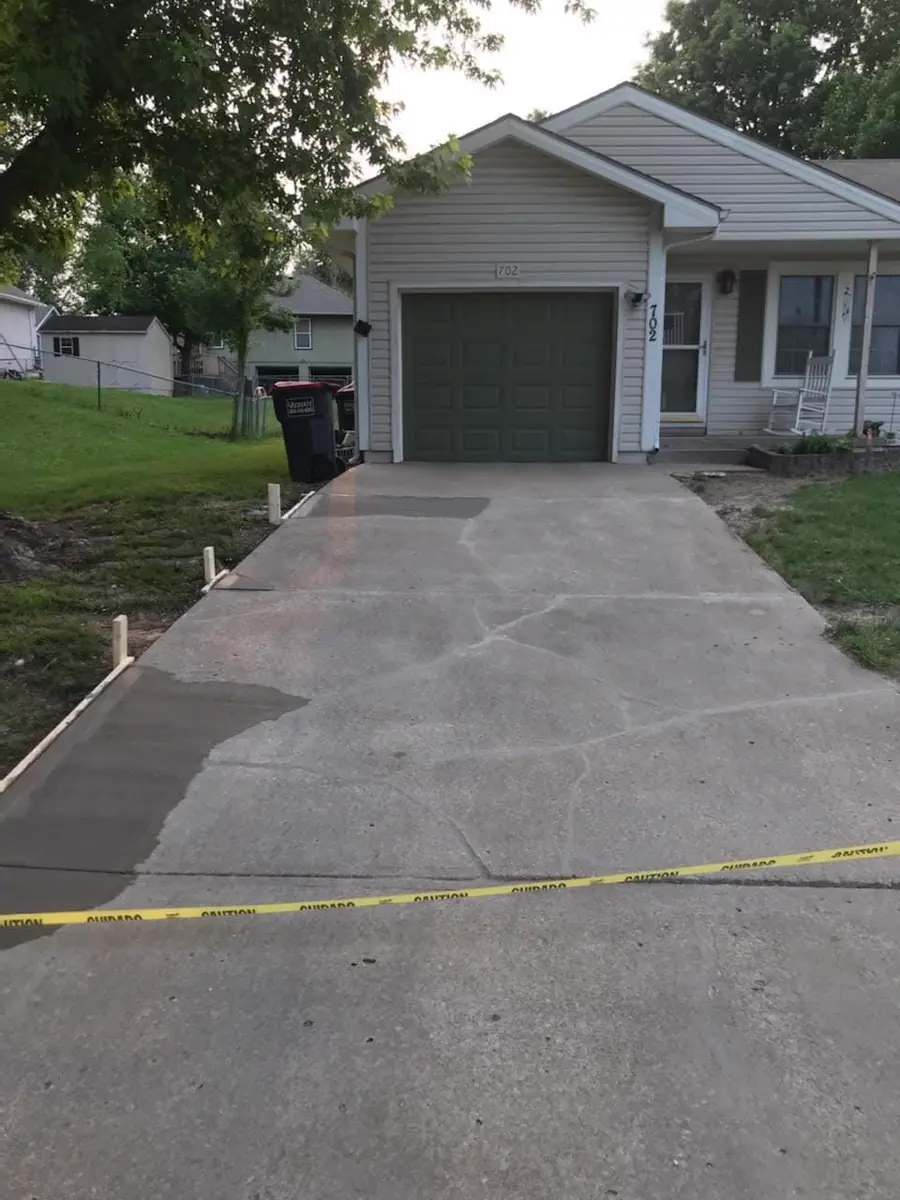
Meet the Team Serving Gladstone
JLB is a local crew — not a franchise. We handle polyjacking & concrete leveling across Gladstone and the Kansas City metro. Watch to see who shows up at your door.
Two Ways to Pay Over Time
12 Months Same As Cash
Pay the full balance within 12 months and you pay no interest.
5 Years at 6.99% APR
A lower monthly payment, spread over 60 months.
On approved credit. Ask for full terms at your free estimate.
No need to put the project off another season.
What Signs of Concrete Settlement Should Gladstone Homeowners Watch For?
These are the signs your concrete has settled and could use leveling.
Driveway Sunken Near the Garage
That lip where the driveway meets the garage? You feel it every time you pull in. It catches wheels, scrapes bumpers, and looks worse every season.
Sidewalk Sections Tilted or Uneven
Guests trip on it. You step over it out of habit. It looks bad and you know it — and so does everyone who walks up to your front door.
Patio Sloping the Wrong Way
Your patio furniture wobbles. Drinks slide. Rain puddles where you sit instead of draining away. It's annoying every single time you use it.
Pool Deck or Porch Sinking
A settling porch or pool deck looks neglected. The gaps between slabs catch toes and collect dirt. It makes the whole backyard look rough.
Water Puddles That Won't Drain
Standing water on your driveway or patio after every rain. It sits there for days, grows algae, and makes your concrete look stained and sloppy.
Visible Gaps Under Slab Edges
You can see daylight under the edges. The concrete is floating over a void, it looks uneven, and it's only going to settle more.
Clay pushing your concrete around in Gladstone?
We'll measure the drop, check the slab condition, and give you a straight price. Most Gladstone jobs finish the same afternoon.
Four Steps to Level Concrete
Most polyjacking jobs are done in a few hours. Here's the process from start to "walk on it today."
Free Assessment
We measure the settlement, identify void locations, and give you an exact quote. No pressure, no upsells — just an honest assessment of what needs leveling.
Small Holes, Big Results
We drill penny-sized holes through the slab at strategic points. These are the injection ports — and they're nearly invisible when we're done.
Foam Injection & Lift
High-density polyurethane foam is injected through the ports. It expands beneath the slab, fills the void, and lifts the concrete back to level with millimeter precision.
Patch, Cure, Walk
Holes are patched, foam cures in 15 minutes, and you can walk and drive on the slab the same day. Done.
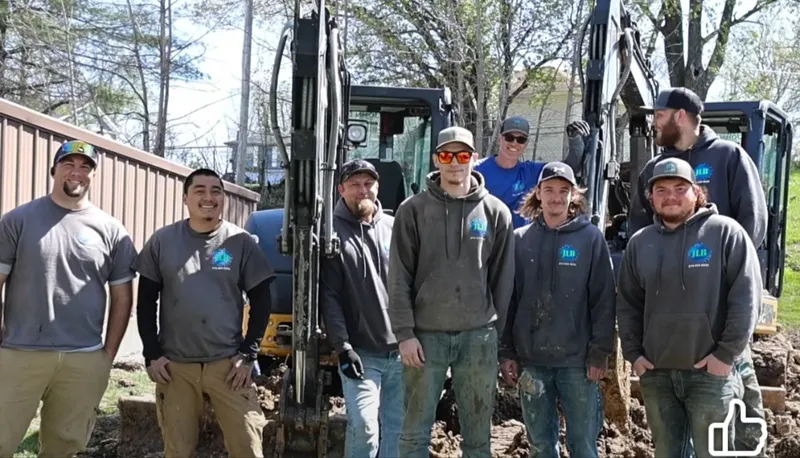
Who Handles Polyjacking & Concrete Leveling in Gladstone?
Gladstone is a close-knit community of about 27000, and we treat it that way. Our Kansas City area crew handles every job in Gladstone personally — the same team that inspects your home is the same team that does the work. No subcontractors, no handoffs.
Call (816) 408-3651“Our driveway had this ugly dip right where you pull into the garage. It drove me crazy for two years. JLB came out, lifted the whole thing in about 3 hours, and you honestly can't tell it was ever sunk. Should've called way sooner.”
Why Do Gladstone Homeowners Choose JLB for Polyjacking & Concrete Leveling?
We earn trust the old-fashioned way: honest assessments, fair pricing, and results that last.
Clay County Permit Expertise
We pull permits and coordinate inspections with Clay County building officials for every concrete leveling job. Our crews have worked with the local building department for years — we know their process inside and out.
Concrete Leveling Specialists
Gladstone's driveways, sidewalks, patios, and garage floors settle when the ground beneath them washes out or compacts. Our crews lift and level flatwork with polyurethane foam that fills the void and raises the slab back to grade — usually the same day. We know when polyjacking beats old-style mudjacking and when a slab is too far gone to save.
Small-Town Accountability
In Gladstone, reputation is everything. We show up when we say we will, we do the work right, and we stand behind it with a transferable warranty. Every job gets our full attention.
Affordable Solutions
Gladstone's terrain means some homes face bigger concrete-settling challenges than others. We offer financing to make sure the cost doesn't prevent you from protecting your home when the soil is working against it.
What Does Polyjacking & Concrete Leveling Cost in Gladstone, MO?
Gladstone's terrain means water runoff can wash soil from beneath concrete surfaces faster than on flat ground. Driveways, walkways, and patios on sloped lots are especially prone to settling. Here's what polyjacking costs to fix it.
| Project Type | Typical Cost Range | Notes |
|---|---|---|
| Sidewalk section (1–2 slabs) | $300–$800 | Most affordable concrete leveling project |
| Driveway leveling | $800–$2,500 | Depends on number of injection points |
| Patio leveling | $500–$1,500 | Depends on size and number of voids |
| Garage floor leveling | $600–$2,000 | Often combined with driveway work |
| Pool deck leveling | $1,000–$3,000 | Requires precision for drainage slope |
| Per-hole injection point | $150–$350 | Most projects need 4–12 injection points |
These ranges reflect typical Kansas City metro pricing as of 2026. Actual costs vary based on the area being lifted, number of injection points, and accessibility. JLB provides free assessments — call (816) 408-3651 for an accurate quote.
Two Ways to Pay for It
12 Months Same As Cash
Pay the full balance within 12 months and you pay no interest.
Best if you can pay it off within a year.
5 Years at 6.99% APR
A lower monthly payment, spread over 60 months.
Best for bigger projects.
On approved credit. Ask for full terms at your free estimate.
No need to put the project off another season.
Concrete Leveling Questions for Gladstone Homeowners
Gladstone sits on a high-elevation clay deposit that is denser and more expansive than the alluvial soils found closer to the Missouri River. This clay has a very high shrink-swell rating, meaning it changes volume significantly with moisture. Because Gladstone is landlocked and fully built out, there's no mix of new engineered fill sites offsetting the old native-clay lots. Nearly every property in the city has flatwork sitting directly on this aggressive clay — which is why settling is so widespread here.
Yes. The foam is injected beneath the slab through small surface holes, so it doesn't disturb root systems on either side of the driveway. The foam fills voids that tree roots helped create by drying out the surrounding clay. Even if the trees continue to draw moisture from the soil after treatment, the foam holds its volume because it's closed-cell and doesn't interact with soil moisture. Polyjacking is the least disruptive option for lots where tree preservation matters.
The deciding factor is the slab's condition. If the concrete has settled but is still intact — no crumbling, no pieces breaking off, no severe deterioration — polyjacking can lift it back to grade. If sections have broken into loose chunks that won't hold together when lifted, those sections need replacement. Most mid-century concrete in Gladstone is solid despite surface wear, making it a good candidate for foam leveling rather than tear-out.
Each injection hole is about 5/8 inch in diameter — roughly the size of a dime. After the foam is injected and the slab reaches its target grade, the holes are filled with a concrete patch compound that matches the surrounding surface. On a typical grey concrete driveway or sidewalk, the patched holes blend with existing surface imperfections and are difficult to notice after curing. The patches do not affect the slab's strength or water resistance.
Very little. Polyjacking foam weighs 2 to 4 pounds per cubic foot, compared to more than 100 pounds per cubic foot for mudjacking slurry. A typical Gladstone driveway lift adds less than 50 pounds of total foam weight beneath the slab. This lightweight fill is important on Gladstone's dense clay because it doesn't add load to soil that has already demonstrated it compacts under pressure. The foam fills the void and lifts the slab without overloading the bearing surface.
Free Concrete Leveling Assessment in Gladstone
Fill out the form and we'll contact you within 24 hours to schedule your free concrete assessment. Or call us now at (816) 408-3651.
Where Else Does JLB Provide Polyjacking & Concrete Leveling?
Our Locations
We're always close enough to help — our crews are local to your area.
JLB Foundation Repair & Basement Waterproofing — Kearney
24011 State Rte 92Kearney, MO, 64060(816) 656-6835 View on Google Maps
JLB Foundation Repair & Basement Waterproofing — Kansas City
111 NE 72nd St, Ste 111Kansas City, MO, 64119(816) 408-3651 View on Google Maps
Level Your Concrete. Get a Free Assessment.
A free assessment takes about 30 minutes. We'll measure the settlement, explain your options, and give you an honest quote — most jobs are done the same day.