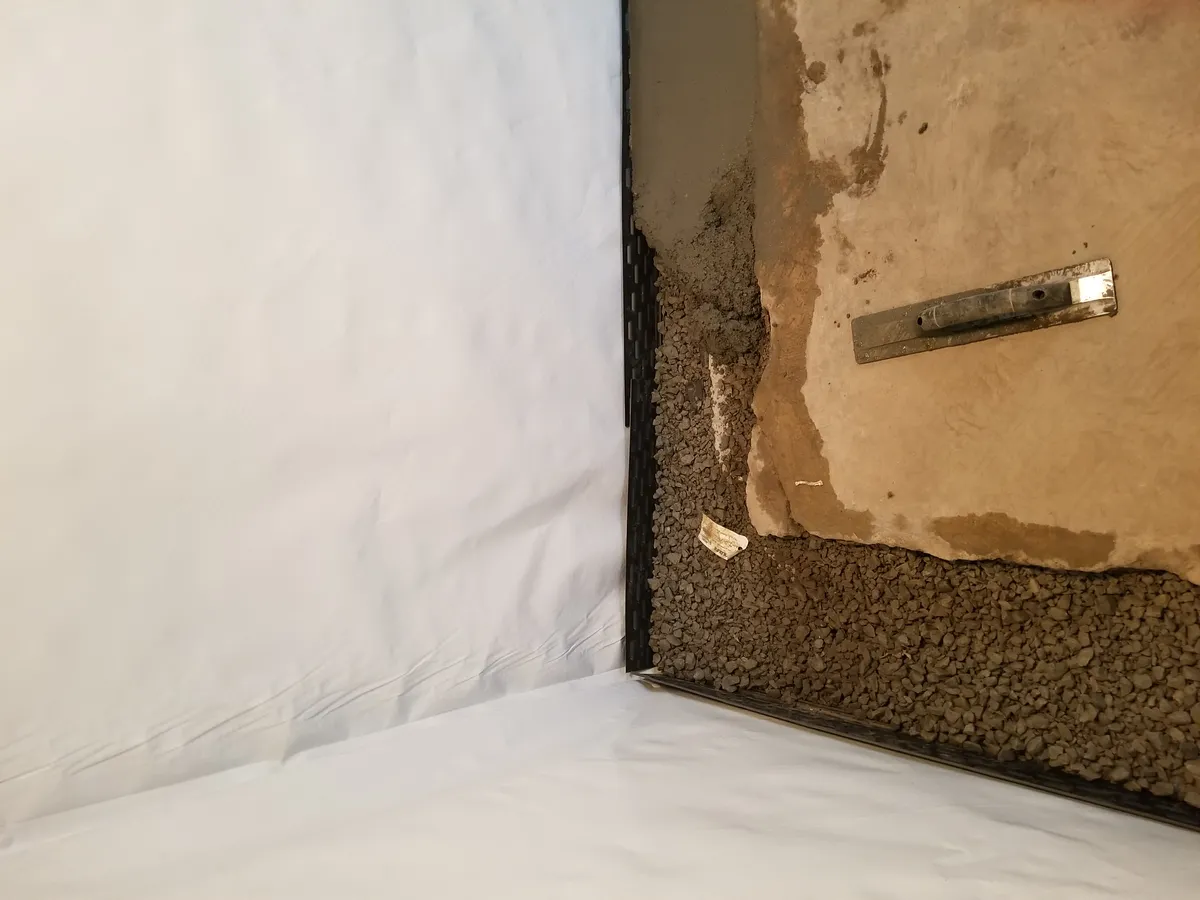
Basement Sealing & Waterproofing in Prairie Village, KS
Prairie Village was planned in the 1940s and 50s as a dense grid of small, flat lots — and that layout is the water problem. On a tight Village lot the roof, the downspouts, and the neighbor's runoff all land within a few feet of the foundation, and on Johnson County's clay there's simply nowhere for it to drain. The water ends up against your basement or crawlspace wall by default.

Free 45-Minute Analysis + Written Report
Get a precise analysis of your foundation and waterproofing situation, and a clear estimate on what any fixes or corrections might cost.
Takes 30 seconds. We'll call within 24 hours.
Thank You!
We'll be in touch within 24 hours.
On a small, flat 1950s Prairie Village lot, where is all the water supposed to go?
The Village was built dense and flat — and water needs somewhere to go
Prairie Village is one of the country's model post-war suburbs, laid out in the 1940s and 1950s as a tight grid of modest cape cods and small ranches on compact, level lots. That planning is part of the city's charm and part of its water problem. On a small flat lot in Corinth or near the Village Shops, there isn't much distance between your downspouts, your foundation, and the property line — so a roof's worth of rain lands close to the wall, and the level ground gives it no slope to carry it away. Underneath sits Johnson County's Wymore-Ladoga clay, in the slowest-draining soil group there is, which won't absorb the surplus. The water pools against the foundation and pushes in through the cove joint, the seam where the floor meets the wall.
Where two neighbors' water collides
Density compounds it. When your downspout discharges a few feet from your neighbor's foundation and theirs empties toward yours, grading becomes a zero-sum contest that no single yard can win on flat ground. Many of these 1950s homes also have partial basements or crawlspace sections that were never sealed, and those low, enclosed spaces become the quiet collection point — damp air, a musty smell, and efflorescence blooming on the block long before anyone sees standing water. Six or seven decades of mature Prairie Village tree canopy add their own swing, drawing the clay down in summer and letting it rebound wet in spring, working the cove joint a little looser each cycle.
Managing the water the lot can't shed
When there's no room to move water away outside, the dependable answer is to control it at the foundation. We install interior drain tile along the footing to intercept what the tight lot can't drain, route it to a sealed sump basin, and add a pump with a battery backup — important in a metro where the storms that overwhelm a small lot are the ones that cut the power. On the crawlspace sections common to Village homes we add a vapor barrier so that enclosed space stops feeding humidity into the house. And because so much of the trouble here starts with downspouts emptying right at the wall, we'll often pair the interior system with extended downspouts and regrading to carry roof water past the foundation before it can pool. Every plan follows a free on-site inspection; your lot, your wall type, and whether you have a crawlspace set the design and the price.
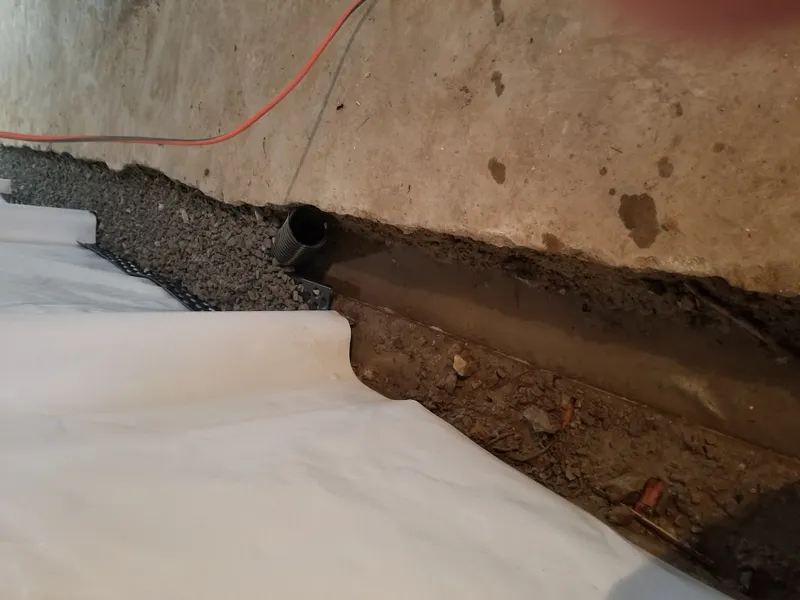
Meet the Team Serving Prairie Village
JLB is a local crew — not a franchise. We handle basement waterproofing across Prairie Village and the Kansas City metro. Watch to see who shows up at your door.
Watch Basement Waterproofing Work in Prairie Village
Two Ways to Pay Over Time
12 Months Same As Cash
Pay the full balance within 12 months and you pay no interest.
5 Years at 6.99% APR
A lower monthly payment, spread over 60 months.
On approved credit. Ask for full terms at your free estimate.
Foundation and water problems rarely get cheaper while they wait.
What Basement Water Warning Signs Appear in Prairie Village Homes?
Every storm between now and the repair is another cycle of damage. In Prairie Village, spring thunderstorms can drop two inches of rain in an hour — and the clay can't absorb it, so it presses against your foundation. Each time water enters through the same crack or joint, it carries minerals that erode the concrete and widens the path for next time.
Water Seeping Through Wall Cracks
Active water intrusion through foundation cracks. Every rain event pushes more water in, and the cracks widen over time. In Prairie Village's concrete block homes, stair-step cracks along mortar joints are especially common — a direct result of lateral clay pressure.
Damp, Stained, or Wet Walls
White mineral deposits (efflorescence), dark stains, or walls that are damp to the touch. Water is migrating through your foundation constantly. Block basements in Prairie Village often show efflorescence (white mineral deposits) before active leaking begins — an early warning worth acting on.
Musty, Moldy Smell
If you can smell it, mold is already growing. That musty odor means moisture has been present long enough to colonize — and it's in the air your family breathes. In Prairie Village's climate, musty crawlspace air rises into the living space through a process called the "stack effect" — what's below affects everything above.
Standing Water or Puddles After Rain
Water pooling on the basement floor means groundwater is overwhelming your foundation. Without intervention, every storm is a flood event. Block basements in Prairie Village often show efflorescence (white mineral deposits) before active leaking begins — an early warning worth acting on.
Sump Pump Running Constantly or Failed
A sump pump that runs nonstop is fighting a losing battle. One that's failed means your basement has zero flood protection right now. Prairie Village homes on concrete block basement foundations in Johnson County are particularly susceptible to this issue.
Peeling Paint or Bubbling Walls
Hydrostatic pressure is pushing moisture through the concrete itself. The paint is the least of your problems — the concrete is saturated. Prairie Village homes on concrete block basement foundations in Johnson County are particularly susceptible to this issue.
Water finding its way into your Prairie Village basement?
Johnson County's clay soil holds water against foundation walls like a sponge. Once hydrostatic pressure exceeds what your walls can handle, the water comes in. Our free estimate identifies exactly where and why — and we'll show you the most cost-effective way to stop it permanently.
Four Steps to a Dry Basement
From "I dread every rainstorm" to "I forgot it used to leak" — here's how we get you there.
Water Source Inspection
We identify exactly where and how water enters your basement — cracks, joints, floor seepage, or wall migration. No guessing, just answers.
Custom Waterproofing Plan
Based on your water entry pattern and soil conditions, we design a system that addresses every vulnerability. You'll know the full scope before we start.
System Installation
Our crew installs your drainage, sump, and sealing systems. Most waterproofing projects complete in 2–4 days with minimal disruption to your home.
Dry Basement — Guaranteed
Your basement stays dry through every storm. We stand behind our work with a warranty because we know the system works.
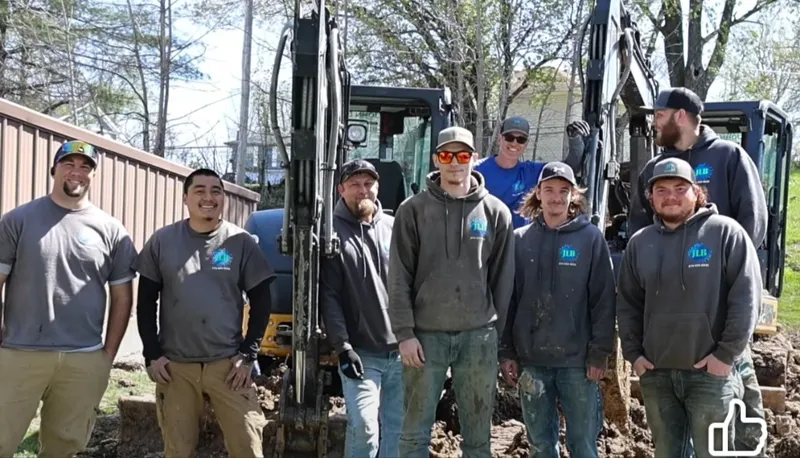
Who Handles Basement Waterproofing in Prairie Village and Johnson County?
Prairie Village is a close-knit community of about 23000, and we treat it that way. Our Kansas City area crew handles every job in Prairie Village personally — the same team that inspects your home is the same team that does the work. No subcontractors, no handoffs.
Call (816) 408-3651“We had water coming in every single time it rained. JLB installed an interior drainage system and sump pump — haven't seen a drop since. We finally finished the basement and it's been bone dry through two years of Kansas City storms.”
Why Do Prairie Village Homeowners Choose JLB for Waterproofing?
We earn trust the old-fashioned way: honest inspections, fair pricing, and repairs that last.
Licensed in Kansas & Missouri
JLB is fully licensed to perform basement waterproofing and drainage work in both Kansas and Missouri. For Prairie Village homeowners in Johnson County, that means we handle the Johnson County permit applications, coordinate inspections, and ensure code compliance from start to finish.
Concrete block Basement Specialists
Prairie Village's concrete block basements leak differently than newer walls — water works through the mortar joints and the cove joint first. Our crews install interior drain tile, sump systems, and vapor barriers matched to how these older foundations shed water.
Small-Town Accountability
In Prairie Village, reputation is everything. We show up when we say we will, we do the work right, and we stand behind it with a transferable warranty. Every job gets our full attention.
Financing That Fits
Basement water problems only get more expensive over time. We offer flexible payment plans so Prairie Village homeowners can act now instead of watching a small problem grow into a costly one.
Real Projects. Real Results.
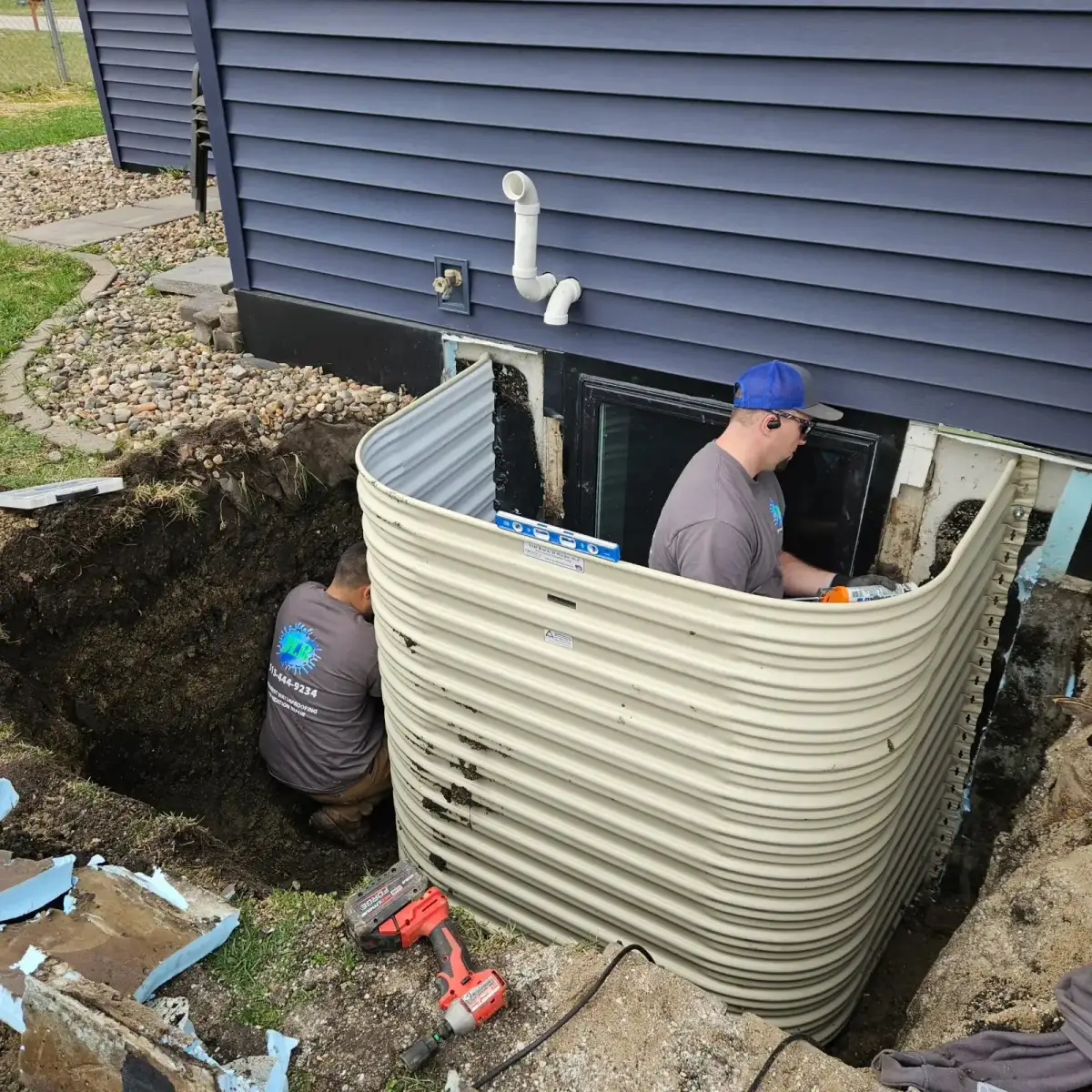
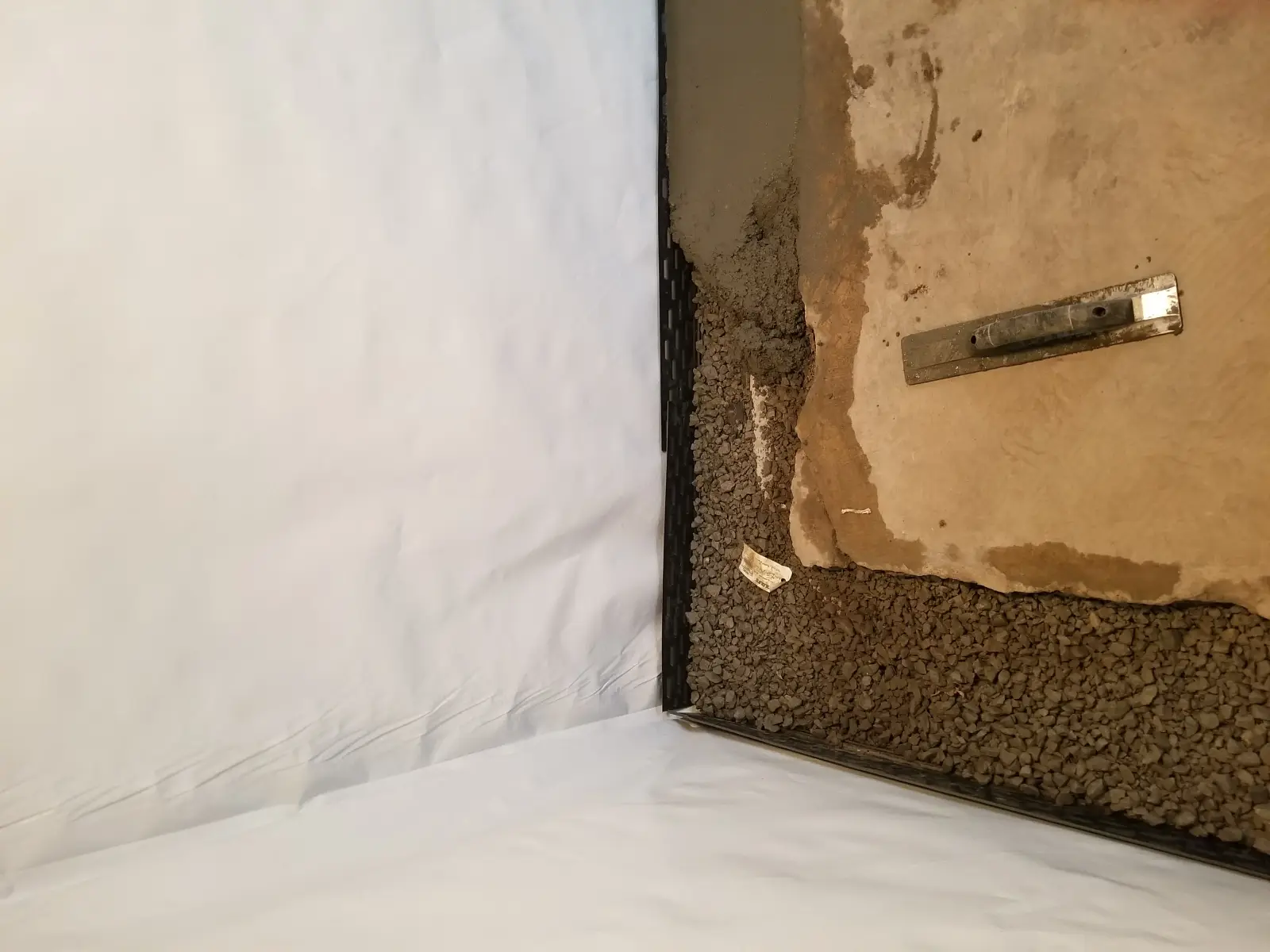
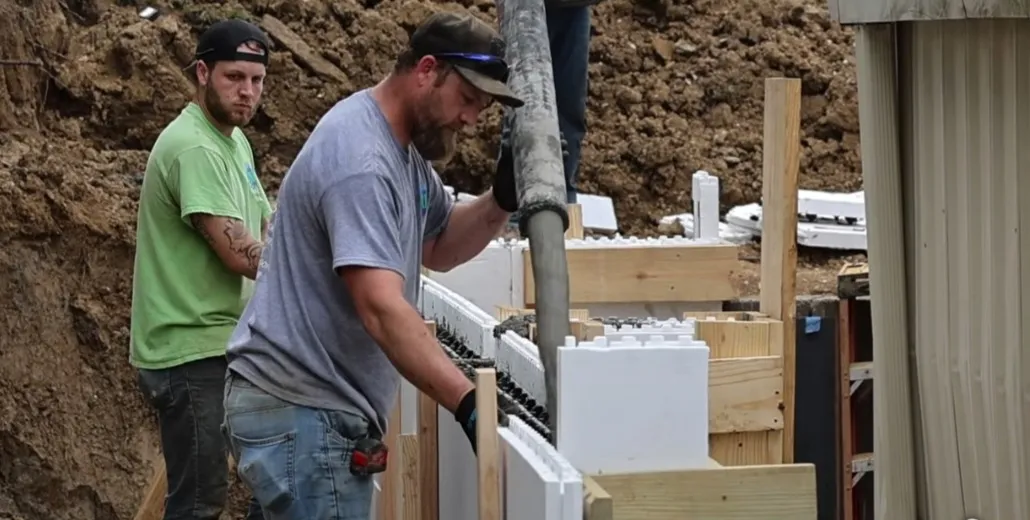
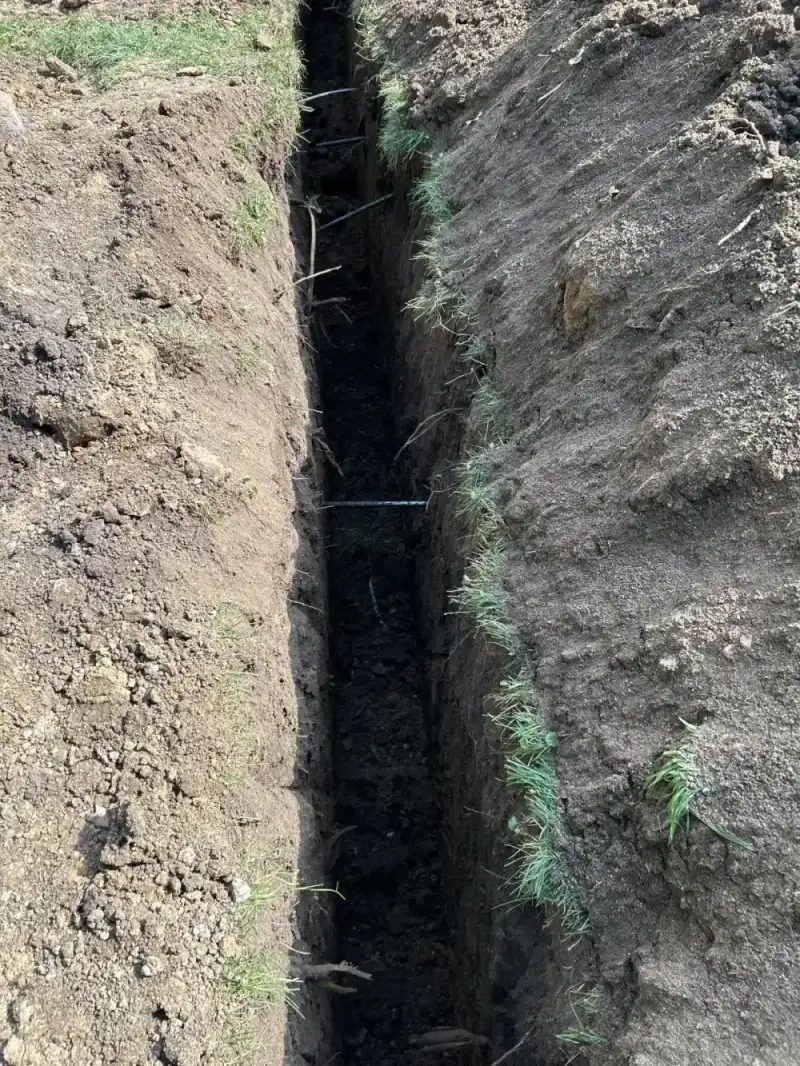
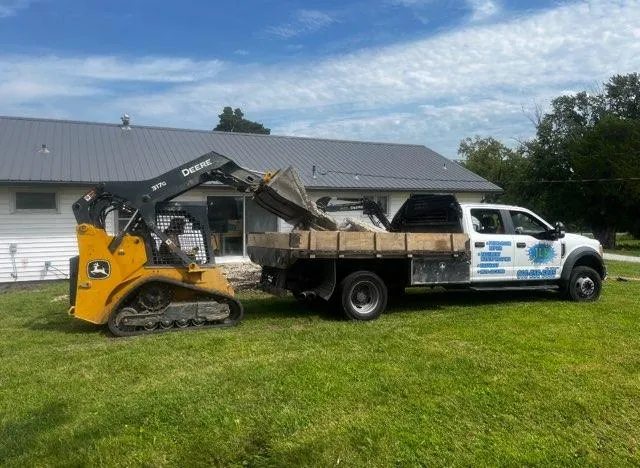
Every photo is from an actual JLB job site — not a stock photo. See the work we do every day across Kansas City and Des Moines.
What Does Basement Waterproofing Cost in Prairie Village, KS?
Prairie Village's flat terrain means water pools against foundations instead of draining away. Most Johnson County homes need an interior drainage system to manage hydrostatic pressure. These are the typical costs for Kansas City metro waterproofing projects.
| Method | Typical Cost Range | Best For |
|---|---|---|
| Interior French drain + sump pump | $3,000–$7,000 | Active water seepage through floor/wall joint |
| Interior wall sealant/coating | $500–$2,500 | Minor dampness, condensation |
| Exterior waterproofing membrane | $8,000–$15,000 | Severe water intrusion, requires excavation |
| Sump pump installation | $1,000–$2,500 | Homes without existing pump, high water table areas |
| Crack injection (per crack) | $250–$800 | Individual foundation wall cracks |
| Complete interior system (drain + pump + wall treatment) | $4,000–$8,000 | Most common full solution |
| Exterior excavation + drain tile | $10,000–$20,000 | Full-perimeter exterior protection |
These ranges reflect typical Kansas City metro pricing as of 2026. Actual costs vary based on basement size, severity of water intrusion, and system type. JLB provides free estimates — call (816) 408-3651 for an accurate quote.
Two Ways to Pay for It
12 Months Same As Cash
Pay the full balance within 12 months and you pay no interest.
Best if you can pay it off within a year.
5 Years at 6.99% APR
A lower monthly payment, spread over 60 months.
Best for bigger projects.
On approved credit. Ask for full terms at your free estimate.
Foundation and water problems rarely get cheaper while they wait.
Basement Waterproofing Questions for Prairie Village Homes
On a compact, level Village lot, water simply has nowhere to go. A roof collects a large volume of rain and delivers it through the downspouts to the ground within a few feet of your foundation, and flat terrain gives that water no slope to run off. Beneath it sits Johnson County's Wymore-Ladoga clay, in the slowest-draining soil group there is, which won't absorb the surplus. So the water pools against the foundation and hydrostatic pressure pushes it in through the cove joint where the floor meets the wall. It's less about unusual soil than about a tight lot that can't shed what lands on it.
Very often, yes, and Prairie Village's density makes it worse. When your downspout discharges a few feet from your wall — and your neighbor's empties toward your lot — a roof's worth of water is dumped right where it can do the most damage, on ground too flat and too tight to carry it away. Extending downspouts to move roof water well past the foundation is one of the highest-value first steps we recommend here. Where the lot leaves no good discharge route, we pair that with an interior drainage system so the water that still reaches the wall is captured and pumped out rather than pooling.
Many of Prairie Village's 1950s homes have partial basements or crawlspace sections that were never sealed, and on a lot that can't shed water those low, enclosed spaces become the quiet collection point. Moisture wicks up through the block and the exposed soil floor, the air turns damp and musty, and you'll often see efflorescence — the chalky white bloom — on the walls before any standing water appears. A vapor barrier over the floor and walls cuts off that ground moisture, and where water is actively entering we tie the space into drainage. Sealing the crawlspace also keeps its humidity from rising into the living areas above.
The cove joint is the usual entry point — the seam where the basement floor meets the wall, and the lowest unsealed seam in the foundation. On a flat Village lot, water pools against the wall, saturated clay builds hydrostatic pressure at the footing, and that pressure forces moisture up through the cove joint. In the block foundations common to these homes, water also seeps through the porous block and mortar joints, showing as efflorescence. Interior drain tile installed along the footing intercepts the water at that level and routes it to a sump pump before it reaches your floor.
A straightforward interior perimeter with a sump pump typically falls in a mid-four-figure range, rising with the basement's size, the number of pump locations, and whether a crawlspace section needs sealing. That's usually well below exterior excavation, which runs into five figures and is especially disruptive on a small, tightly-spaced Village lot with mature landscaping and little access. Those are typical ranges rather than a quote — your lot, your wall type, and whether you have a crawlspace determine the real number, which is why every JLB plan starts with a free on-site inspection.
Not Sure What You're Dealing With?
Click any symptom below to learn what it means, what's likely causing it, and how we can help. Most of these are more common — and more fixable — than you'd think.
Diagonal, stair-step, or horizontal cracks in drywall, plaster, or brick usually trace back to soil movement beneath your foundation. The heavy clay soils in the Kansas City and Des Moines metros expand and contract seasonally, which can shift your foundation over time. The good news: this is very fixable with the right approach.
Water entering through floor joints, wall cracks, or seeping through porous concrete means groundwater pressure is pushing moisture into your basement. An interior drainage system and sump pump can solve this permanently — and we can usually have it done in a day or two.
When a foundation settles unevenly, it can shift your home's frame just enough to make doors and windows bind. This is one of the earlier signs of foundation movement — and catching it early often means a simpler, less expensive repair.
That musty smell is moisture. Up to 40% of the air in your home rises from below — from your crawlspace and basement. If there's excess humidity down there, it affects your whole home. Encapsulation seals it out, and you'll notice the difference in your air quality right away.
Floors that slope toward the center or an exterior wall usually mean the support structure underneath needs attention. Push piers can stabilize your foundation and often lift it back to level — giving your floors a second life.
When soil washes out or compacts beneath a concrete slab, the slab drops and becomes uneven. Polyjacking uses expanding polyurethane foam to fill the void and lift the concrete back to grade — usually in under a day, with no heavy equipment needed.
Water collecting near your foundation means your grading or drainage isn't directing water away effectively. French drains, regrading, extended downspouts, and drain pipes can redirect water away from the house — protecting your foundation for the long haul.
A basement wall that has bowed more than 2 inches inward, shifted off its footing, or shows multiple structural cracks may have moved beyond what bracing can fix. When carbon fiber straps, I-beams, or wall anchors are not enough, the wall needs to be removed and rebuilt with reinforced concrete. This is the last resort — but it is the permanent fix when the wall itself is compromised.
Get Your Free Waterproofing Assessment in Prairie Village
We'll evaluate your basement's drainage, crack patterns, and moisture levels — all at no cost. If your Prairie Village basement is showing signs of water, fill out the form or call us at(816) 408-3651.
Basement Waterproofing in Cities Near Prairie Village
Our Locations
We're always close enough to help — our crews are local to your area.
JLB Foundation Repair & Basement Waterproofing — Leawood
10308 State Line Rd Suite 300Leawood, KS, 66206(913) 660-6308 View on Google Maps
JLB Foundation Repair & Basement Waterproofing — Kansas City
111 NE 72nd St, Ste 111Kansas City, MO, 64119(816) 408-3651 View on Google Maps
Stop the Damage. Get Answers Today.
A free estimate takes 45 minutes and tells you exactly what's going on under your house — and exactly what it takes to fix it.